
The Story of Everything: Helpful or Hurtful for Christians?
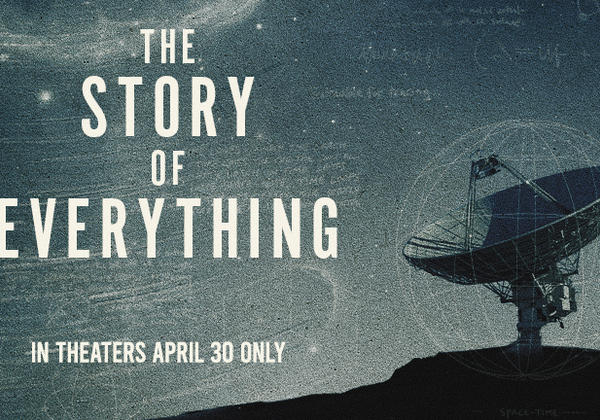
There is a new movie coming to theaters soon from Fathom Entertainment, and this one is poised to be a total grandslam. A entire film with a panel of experts sharing how design is a fundamental tenet of the universe.
The film is based on a groundbreaking work by The Discovery Institute’s Dr. Stephen Meyer, The Return of the God Hypothesis.
A friend of mine, Pat, recently shared a Facebook post expressing concerns about the movie. To be completely clear, I have great respect for Pat, and this post is not intended in any way to be a takedown of his post. Worldview-wise, we align, but I am going to suggest that we take a hard look at the goals of this movie and suggest a framework that may be more helpful.
Here’s what he had to say:
The Story of Everything is coming to theaters April 30th.
This movie will focus on the design we see throughout the universe. Sounds wonderful, doesn’t it? However, many Christians will go to this movie and walk away confused.
Here’s the reason why: The movie will present the idea that ALL things were created by a Big Bang. And while they appear to be using incredible animations to show the amazing complexity of life, they attribute it to an intelligence directing the forces and matter spewed out from the Big Bang. Sadly, this goes against the Biblical account in Genesis. While trying to combine the ideas of those that propose a strictly materialistic origin of the universe, with the idea of an Intelligent Designer, they miss all the true scientific evidence against the Big Bang, and for the Genesis account.
Pastors, many in your church will see this movie. Christians, many of your family and friends will be taken in by the breath-taking imagery supporting the claims made by this movie. Would you like to be better equipped to have answers?
The Creation Quest team believes this is such an important moment in time, we want to make sure you’re equipped to answer these questions. Our Genesis Experience program addresses the very issues covered in the movie yet focuses on the truth of the Bible. This interactive presentation is designed especially with families in mind and can be presented at your Church, Christian School, or Homeschool co-op. If you’d like a more traditional talk, we can also do a presentation on this issue.
We don’t require an honorarium! To invite us, please message us.
I’m okay with this. He is not wrong as far I am concerned. This movie will lead to confusion for some and it will, in my view, create a false sense of security about theological issues that converge with the age of the earth debate.
But this movie has goals that differ from those of us who believe the age of the earth matters. And funny enough, I’ve had to defend a creationist movie in the past from the same criticism. The shoe is on the other foot now, and in an effort to be consistent, I feel obliged to respond to this concern in the same way.
The Line of Design
Let’s not bury the lead any further. I am a young age creationist. This movie is not going to take that position. While it will likely not make a big deal out of the earth’s age, it for sure will rely on the conclusions of mainstream scientists.
This will (intentionally) leave some with the impression, “Oh I thought as a Christian I had to believe the earth was young. I guess I was wrong.” That’s the point. This movie will draw a line in the sand. That line is not the age of things. That line is design.
I’m drawn back to about seven years ago when I wrote a long blog post responding to a critique by Luke Nix of the Is Genesis History? movie. In his post, he commented on another point made by someone featured in the movie, Paul Nelson, who had dissented from his role. (This point was then (and now is!) especially salient since Nelson is himself a young age creationist, who happens to work with the group producing the new film in question.)
Nelson argued that IGH presented a false dichotomy: by leaving out a large swath of Christians who accept variations of old earth and evolutionary teaching, the film presented a false choice between young earth creationism and atheism.
This sentiment became quite popular and has been repeated ad nauseam, including by Gavin Ortlund whom I also responded to a couple years ago.
Here’s how I responded to Luke Nix:
Prima facie, it’s easy to see Nix’s concern.
He (as do all progressive creationists) want to have a seat at the table and believe others should as well.
But this wasn’t their movie.
Here’s what I mean: Had this been The Discovery Institute’s (hereafter DSC, where Nelson is affiliated) movie, they would have likely drawn a line between themselves and theistic evolutionists. Indeed, they draw this line almost daily throughout their publications and held nothing back in their 2018 release of the ironically-titled tome, Theistic Evolution.
By drawing this line, progressive creationists and age-agnostic ID proponents are not claiming theistic evolutionists are not Christians; rather, they are deciding to place their theological stake in the ground on a particular issue and creating materials which advance views on their side of the stake and critically evaluate views on the other side.
Let’s be clear that this is exactly what the IGH movie is attempting to do.
DSC draws the line at “design” vs. “no design,” and any movie they made would surely reflect that. IGH draws the line at a particular understanding of history, and thus, they created a movie which reflects that.
Could the IGH movie have better presented this? Perhaps, which is (I think) all Nelson was pining for. However, surely one could not fault IGH for publicly opposing views which they believe have implications for the gospel (and critiquing them as such), just because someone with the opposing view does not believe so!
Progressive creationists and ID proponents most often join the young age creationist in harsh criticism of theistic evolution, including its implications for the gospel (lest we think the robust theological section of Theistic Evolution was written merely because DSC et al. prefers their understanding of the gospel over the theistic evolutionist’s).
Therefore, I argue the IGH dichotomy exists, but not fallaciously. It is drawn precisely because young age creationists like myself hold the strong conviction that accurate history—where we draw the line—also has implications for the gospel; not merely God’s chosen method of bringing about the natural order.
So I now find myself in the awkward position of having to defend this movie from its young age creationist critics now that the shoe is on the other foot. 😂
Putting it plainly, two things have happened:
- In the time since writing the blog response, DSC (led by Dr. Stephen Meyer) now has produced their own movie. And it draws the line at design, not age. Will those who cried with outrage due to an unfair presentation of the available options in the IGH movie also do so for this one now that its their movie and their choice of paradigm?
- Creationists have already started latching onto this concern and leveling the exact same critques of this movie that were leveled against IGH, and this is only the beginning. Pat is one of the more gracious and kind defenders of young age creationism. Just wait til the peanut gallery gets in on it!
Being fair, Pat may have no idea about these specific criticisms against the IGH movie that are eerily similar to his view of the new DSC movie. This blog isn’t about his post so much as it’s about calling ourselves to a high standard as creationists and gaining the most complete picture of these efforts.
The Point of The Movie
So what is the point of this movie, then?
Well, a helpful clarification: The movie isn’t out yet and I haven’t seen it. So I suppose it’s possible everything I’ve said so far is wrong. I doubt it, though, if history is any guide, and would love to stand corrected by a contributor or early viewer if they happen to see this.
I’ll give you what I think based on the history of the organization behind the movie.
I don’t think the point of the film is evangelism. Take from that what you will, but just know that I don’t personally consider that a bad thing. Not every movie can be evangelism. Most stuff that tries ends up being corny and counterproductive anyway.
While I think the timing is a coincidence (at least from a human perspective), this movie happens to be landing during a major renaissance of faith happening in our culture.
The bankruptcy of the New Atheism is all but annihilated and people are returning to God in droves. The unironically titled book — The Return of the God Hypothesis — works well for the moment, you gotta admit.
My guess is among the droves returning to faith, there remain many who are skeptical of how science and faith can work together. They know something’s missing, but feel that religion has been outpaced by science and can’t quite see themselves making the move.
I think the point of this movie is going to be to answer those concerns and show that not only do they work together, they can’t work without one another. This happens to be true.
Now of course, if we’re arguing biblical theology, I’m gonna to take major issue with this movie’s approach. It won’t argue biblical theology, though. It’s really not their style.
The official announcement makes this explicit:
“Intelligent design should not be conflated with what is typically defined as creationism. Intelligent design limits itself to what can be known from the observation of nature. It does not try to interpret the Bible or base its findings on the biblical text.”
I do happen to know that some Christian apologists will be commenting in this film, such as Lee Strobel. I can’t imagine a movie with Lee Strobel that has zero gospel connections in it, so I’ll be interested to see how that plays out.
If you forced me to comment on how far I think that will go, I think this movie will be framed less as evangelism and more as pre-evangelism (a term coined by Francis Schaeffer), as is often discussed in the apologetics community. Clearing the way for belief instead of inviting one to belief directly. But I could certainly be wrong.
And while they wouldn’t frame it this way, here’s the way that I’d prefer to see it framed:
I don’t share your exact worldview. I think the Bible teaches a different timeline for earth history that changes how we think about everything. But assuming your worldview for the sake of argument, you still need God to make it work. Here’s how.
I would actually love to see a film or documentary made by a young age creationist who takes that approach and then, at the very end, builds a bridge to invite them into a creationist worldview!
That would be super cool and maybe a project to add to the slate one day.
How Should We, as Creationists, Think About This Movie
(Or, should you go see it or encourage your church to go see it?)
Should you, the reader of this article, go see this movie? I would say probably. If you’re reading this article there’s a very good chance that you’re the kind of person who could handle seeing a movie like this, might even see the value in it, and may even — gasp! — enjoy it for what it is instead of being upset about what it isn’t.
If you are the kind of person who has influence and are unsure whether to recommend that other people to go see this movie, or you’re a church leader and your church teaches young earth creationism, I would still recommend going to see the movie before making a recommendation to those who depend on you for spiritual insight into this sort of thing.
If you feel in your wisdom and discernment that it’s wise to recommend going and seeing this movie, even to learn how to use this line of thinking as an evangelism tool, then please consider whether or not you need to prime your invitees in some way first. Then make a decision accordingly.
If you don’t know how to do that adequately, then 100% you should consider inviting Pat and his team into your church to discuss these issues.
Conclusion
As ostensibly my fellow creationist, I simply want to call you to a place of excitement for the tides that are shifting in our culture.
As I’ve argued in plenty of places, we still have lots to do in terms of bringing more people into creationism, but it’s way more important to me that they become followers of Jesus first.
I absolutely think that movies like this one can be used to help foster that belief.
While we should be discerning about these matters, I do think the Lord can use it for his glory, and I believe that in this case, he will.