
Who Were the Sons of God and the Nephilim? A Friendly, Thorough Response to Dr. Jason Lisle
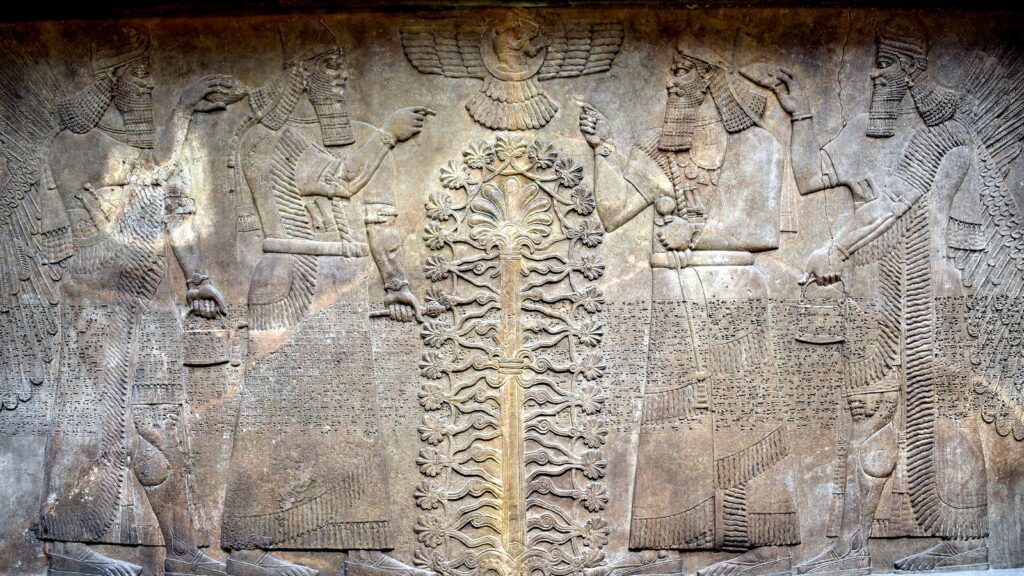
Dr. Jason Lisle recently wrapped up a three-part series at the Biblical Science Institute called “Who Were the Nephilim?” (published October 9, October 23, and November 6, 2026). Across those three articles, he argues that the “sons of God” in Genesis 6:1–4 were human believers who married unbelieving women, that the Nephilim were ordinary children who fell away from the faith of their fathers, and that the supernatural reading of the passage grew out of Greek mythology, uninspired Jewish writings, and faulty copies of the Septuagint.
I hold the view he spends most of Parts 2 and 3 arguing against.
Before we get into a single Hebrew word or theological objection, I appreciate Dr. Lisle’s work. I have learned a great deal from him over the years. His work on distant starlight, presuppositional apologetics, and how Christians ought to think carefully about origins has been a blessing to the church, and I have pointed plenty of people to his books and articles.
I also appreciate the spirit in which he wrote this series. He reminds his readers twice that this is “not a first-tier or even a second-tier issue,” and he writes that he has “good Christian friends who disagree with me on this issue, and we get along very well.” I would like to be one of those friends.
He also shows real restraint throughout his posts. He concedes that the supernatural view was “historically well established” in the centuries around Christ’s ministry. He acknowledges that “the majority of conservative commentaries” take Job 1:6 to refer to angels. He admits in a footnote that his argument from Genesis 6 calling the Nephilim “men” is “not conclusive.” Those concessions show someone trying to think carefully, not someone trying to score cheap points.
I also know what it feels like to stand on Lisle’s side of this debate, because I used to stand there myself! For a season, I rejected the fallen angel reading of Genesis 6 and defended the Sethite view as the simpler, safer explanation. Changing my mind took time, prayer, and a lot of reading in the biblical text and its ancient background, especially through the work of the late Dr. Michael Heiser and fellow young age creationist Tim Chaffey.
Within young age creationism, this is an open, in-house conversation. Bodie Hodge at Answers in Genesis favors what he calls “the fallen men view (a modified Sethite view),” while noting that “Answers in Genesis officially doesn’t take a particular stand on this issue.” Meanwhile, Tim Chaffey, who also works for Answers in Genesis, has written an entire book defending the supernatural view. We agree on six ordinary days of creation, on a historical Adam, on a global Flood, and on the full authority and inerrancy of Scripture. Where we disagree is on what four verses in Genesis 6 actually say.
Here is the passage in front of us:
And it came to pass, when men began to multiply on the face of the earth, and daughters were born unto them, That the sons of God saw the daughters of men that they were fair; and they took them wives of all which they chose. And the LORD said, My spirit shall not always strive with man, for that he also is flesh: yet his days shall be an hundred and twenty years. There were giants in the earth in those days; and also after that, when the sons of God came in unto the daughters of men, and they bare children to them, the same became mighty men which were of old, men of renown. (Genesis 6:1–4)
Lisle’s three-part series is long and packed with arguments (roughly thirty distinct points when you count his footnotes). I do not want to pick two or three easy targets and ignore the rest. In this post, I want to walk through every argument he raises, state his strongest objections at full strength, and explain why I believe the Divine Council reading of Genesis 6:1–4 still accounts for the biblical and historical evidence far better than the believer marriage view.
Shared Ground, Method, and the Other Human Views
Lisle opens Part 1 with a principle every Bible-believing Christian should cheer:
“First and foremost, we must decide whether we are going to let the biblical text determine our conclusions (exegesis) or whether we will let philosophies and ideas outside the text decide what the text means (eisegesis).”
I agree completely! If we are going to be faithful to God’s Word, we must draw meaning out of the text rather than forcing foreign ideas into it. Since God is the ultimate Author of all Scripture and never contradicts Himself, we should compare Scripture with Scripture to understand difficult passages.
So our disagreement is not over whether Scripture should interpret Scripture! Our disagreement is over which Scripture defines the Hebrew phrase in Genesis 6:2 and 6:4, and whether we are actually letting all of Scripture speak (including three New Testament passages Lisle barely mentions, which we will examine in detail later).
We also agree on several specific points in Part 1, and we should put those on the table right away:
- Genesis 6:1–4 is historical narrative. Lisle writes that “The context of Genesis 6:1-4 is historical narrative,” and he is right. Moses is recording real pre-Flood history leading up to Noah and the global Flood, not poetry or myth.
- The strict Sethite lineage view goes beyond the text. Many Christians assume Lisle is defending the traditional Sethite view, where “sons of God” means the line of Seth and “daughters of men” means the line of Cain. To his credit, Lisle declines to go that far. He notes that there is some evidence of godly men in Seth’s line and wickedness in Cain’s line, yet he admits, “However, this interpretation goes beyond the text.” He concludes instead: “Therefore, the most conservative and exegetical position is that the sons of God were believers and the daughters of men were unbelievers, regardless of their respective lineages.”
I want to honor that distinction. I am not going to spend this article attacking the strict Sethite genealogy as if it were Lisle’s position, because it is not.
Still, Lisle’s own rule causes trouble for his believer/unbeliever position. He rejects the Sethite-Cainite restriction because the text never names Seth or Cain in Genesis 6:1–4. Good. Now look back at Genesis 6:1–4 and ask: where does the text mention believers and unbelievers?
It does not! The word “believer” is no more present in Genesis 6:1–4 than the word “Sethite” or the word “angel” is. Gordon Wenham notes that “The Sethite interpretation, for a long time the preferred Christian exegesis, again because it avoided the suggestion of carnal intercourse with angels, has few advocates today.” Dropping the names Seth and Cain while keeping the “believers marrying unbelievers” framework still imports a spiritual contrast that the text never states.
One smaller point where I read the text differently: the 120 years in Genesis 6:3. Lisle argues that “the 120-year limit apparently marks the time until God would destroy mankind with the Flood,” and he calls the lifespan reading “very unlikely” because many people “continued to live to very old ages for many generations long after God’s declaration of the 120 years.” Victor Hamilton and John Chrysostom read it the way Lisle does, and the countdown reading has strong support in 1 Peter 3:20 (“when once the longsuffering of God waited in the days of Noah, while the ark was a preparing”).
I take it as a more general cap on human lifespans. The decline Lisle mentions is gradual, but it moves toward that number, and by the time of Moses 120 years is about as long as anyone lives: “And Moses was an hundred and twenty years old when he died” (Deuteronomy 34:7). Either way, God is setting a limit, and nothing in this debate hangs on which reading is right.
What About Tyrants, Elohim, and Psalm 82?
Lisle also considers the second traditional option: that the “sons of God” were powerful human rulers or tyrants who took common women for themselves. He notes that the Hebrew word elohim means “God” in more than 90 percent of its Old Testament uses, usually refers to false gods in most of the rest, and in a rare third usage can refer to human judges or rulers acting on God’s behalf. He concludes that while the tyrants view is not precluded by the Hebrew, nothing in the context of Genesis 6 suggests it, and it fails to explain either the name “Nephilim” or the explosion of wickedness that followed.
On the tyrants view of Genesis 6, I agree with Lisle’s verdict. Nowhere else in Scripture does the phrase “sons of God” mean human despots, and it leaves the Nephilim unexplained.
However, Lisle’s taxonomy of elohim and his footnote 9 on Psalm 82:6–7 need a closer look, because they lie near the foundation of the whole Divine Council worldview.
Lisle divides elohim into three buckets: (1) the true God, (2) false gods, and (3) human judges or rulers, citing Psalm 82:6 as his example of the third bucket. In footnote 9, he writes:
“I have read an argument that the elohim in Psalm 82:6 are actually angels. However, verse 7 would seem to refute this idea. Verse 7 indicates that these rulers will die like men, yet, according to Christ, angels do not die (Luke 20:36).”
There are three problems with that taxonomy and with that reading of Psalm 82.
First, Lisle’s three categories leave out clear Old Testament uses of elohim that refer to disembodied spiritual beings who are neither Yahweh, nor false idols, nor human judges. In 1 Samuel 28:13, the medium at Endor brings up the spirit of the dead prophet Samuel. Saul asks what she sees, and she replies, “I saw gods [elohim] ascending out of the earth.” Every reader recognizes Samuel did not become Yahweh, a pagan idol, or a human magistrate. As Heiser has explained at length, elohim is not a proper name for God, and it does not describe a set of divine attributes like omnipotence. It is a term of residence! It describes a being whose proper home is the unseen spiritual world. Yahweh is an elohim, of course, and He is utterly unique among all elohim (more on that shortly), yet other spiritual beings are elohim too. Even when Moses is called elohim to Pharaoh in Exodus 4:16 and 7:1, Heiser points out that “The reason Moses is called [elohim] in Exodus 4:16 and 7:1 is that he was functioning similar to the way a member of God’s council would function.”
Second, Psalm 82 reads:
God standeth in the congregation of the mighty; he judgeth among the gods. How long will ye judge unjustly, and accept the persons of the wicked? Selah. … I have said, Ye are gods; and all of you are children of the most High. But ye shall die like men, and fall like one of the princes. (Psalm 82:1–2, 6–7)
Read verse 1 carefully! In Hebrew, God (Elohim, with a singular verb) stands in the divine assembly (adat-el) and judges in the midst of the elohim (plural). This is why Old Testament scholars widely treat Psalm 82 as a parade example of the heavenly council. Verse 7, the very verse Lisle thinks refutes the spiritual beings reading, says: “But ye shall die like men.”
If I walk up to a corrupt human judge and pronounce a solemn sentence of doom on him by saying, “Because of your wickedness, you are going to die like a human!” he would stare at me and say, “Well, obviously. I am a human! We all die like humans.” Saying that someone will die like men (ke-adam) only carries force as a judicial sentence if the beings being addressed are not men. They are immortal spiritual beings (the “children of the most High”) who rebelled against God’s rule over the nations (note verse 8: “Arise, O God, judge the earth: for thou shalt inherit all nations”) and are now sentenced to lose their immortality and die like mortals.
Third, what about Lisle’s appeal to Luke 20:36? Jesus actually says:
Neither can they die any more: for they are equal unto the angels; and are the children of God, being the children of the resurrection. (Luke 20:36)
Jesus is telling the Sadducees about the blessed, glorified state of redeemed believers in the resurrection. Like the faithful angels, resurrected saints are not subject to natural mortality. Does that mean the Almighty Creator lacks the power to execute a sentence of death upon rebellious spiritual beings when He judges them? Luke 20:36 tells us that angels do not die of old age or disease. It places no limit on what the Judge of all the earth can pronounce in Psalm 82:7.
Which “Sons of God”? Examining Lisle’s Word Study
Now we come to the pillar of Lisle’s Part 1 case. He argues that when we survey Scripture, the phrase “sons of God” (and similar expressions like “children of God”) “nearly always refers to believers – those who have trusted in Christ for salvation.” Therefore, he concludes:
“Therefore, unless there is compelling contextual evidence to the contrary, it is hermeneutically appropriate to understand the ‘sons of God’ as believers.”
To support this, he cites Galatians 3:26, Romans 8:14–16, Hebrews 12:5–7, Ephesians 1:5, Galatians 4:5, Romans 9:8, 1 John 3:1–2, John 1:12, Deuteronomy 14:1, Exodus 4:22, Isaiah 63:16, Isaiah 64:8, and Hosea 1:10. In his footnote 2, he counts ten occurrences of “sons of God” in the NASB95: Genesis 6:2, 4; Job 1:6; 2:1; 38:7; Matthew 5:9; Luke 20:36; Romans 8:14, 19; and Galatians 3:26. In footnote 3, he lists eleven occurrences of “children of God,” all of them in the New Testament.
At first glance, that looks like a mountain of verses. When we slow down and check the actual languages and contexts, however, the mountain shrinks fast!
1. His Own List of Ten Verses
Lisle’s own footnote 2 shows this. Out of the ten times “sons of God” appears in the NASB95, five of them are Genesis 6:2, 4 and Job 1:6, 2:1, 38:7. Those are the very five Old Testament verses under dispute.
What are the other five? Every single one of them is in the New Testament, written in Greek (huioi theou) roughly fifteen hundred years after Moses! And all eleven of his “children of God” references in footnote 3 are New Testament Greek (tekna theou) as well.
What are those New Testament passages describing? Paul writes, “For ye are all the children of God by faith in Christ Jesus” (Galatians 3:26), and “For as many as are led by the Spirit of God, they are the sons of God” (Romans 8:14). John writes, “But as many as received him, to them gave he power to become the sons of God, even to them that believe on his name” (John 1:12). That is the glorious New Covenant doctrine of redemptive adoption through the finished work of Christ and the indwelling Holy Spirit.
Can we take a New Testament Greek phrase describing Spirit-wrought adoption “by faith in Christ Jesus” and use it to override how Moses and Job use a specific Hebrew phrase fifteen centuries earlier? No. We do not ignore the New Testament (in fact, we will see in a moment that the New Testament confirms the supernatural view of Genesis 6), yet we cannot flatten distinct phrases across two languages and two covenants as if an English concordance search settles Hebrew lexicography.
2. The Old Testament Verses He Cites Use Different Hebrew
What about the Old Testament passages Lisle cites for believers as sons of God? He points to Deuteronomy 14:1 (“Ye are the children of the LORD your God”), Exodus 4:22 (Israel as God’s firstborn son), Isaiah 63:16 and 64:8 (Israel calling the LORD “our Father”), and Hosea 1:10 (“Ye are the sons of the living God”).
Two things stand out right away.
First, every one of those passages speaks of the nation of Israel in covenant relationship with Yahweh (or, in Hosea 1:10, the future restoration and inclusion of Gentiles alongside Israel). None of them refers to individual pre-Flood believers as a class called “the sons of God.”
Second, and even more decisive, none of them uses the Hebrew phrase from Genesis 6.
The phrase in Genesis 6:2 and 6:4 is bene ha-elohim (“the sons of God”). In Deuteronomy 14:1, the Hebrew is banim atem la-YHWH eloheykhem (“sons are you to the LORD your God”). That is a covenantal predicate (“you are sons to Yahweh”), not the fixed title bene ha-elohim. In Hosea 1:10 (2:1 in the Hebrew text), the phrase is bene el-chay (“sons of the living God”). Again, a different Hebrew construction!
Derek Kidner sums this up with admirable clarity: “while the Old Testament can declare God’s people to be his sons, the normal meaning of the actual term ‘sons of God’ is ‘angels’, and nothing has prepared the reader to assume that ‘men’ now means Cainites only.” Gordon Wenham agrees, writing of the human believer reading, “The present phrase ‘sons of God’ is, to say the least, an obscure way of expressing such an idea.”
When we search the Hebrew Bible for bene ha-elohim (and its close variant without the article, bene elohim), where does it appear outside Genesis 6? It shows up in three verses: Job 1:6, Job 2:1, and Job 38:7.
Several related Hebrew phrases point in the same direction: bene elim (“sons of the mighty” or “divine beings”) in Psalm 29:1 and Psalm 89:6, and bene elyon (“children of the most High”) in Psalm 82:6, alongside an ancient manuscript reading of Deuteronomy 32:8. Simply listing these references proves nothing by itself. A reader who holds the human view of Genesis 6 has every right to ask whether these passages actually describe heavenly beings, so we will examine each of them in its own context below instead of assuming the conclusion.
3. Does the Hebrew “Son” Idiom Help Lisle?
In Part 1, Lisle adds a creative supporting argument under the heading “Men are Sons.” He observes that Hebrew frequently uses the word “son” (ben) where English uses “man” or an age description: Abraham is literally a “son of ninety-nine years” (Genesis 17:24), Job is the greatest of the “sons of the east” (Job 1:3), and valiant men or worthless men in 1 and 2 Samuel are literally “sons” of valor or worthlessness. From this, Lisle infers:
“Thus, in the Old Testament we infer that ‘sons of God’ are ‘men of God’ – descendants of Adam who trust in the Lord.”
Test that Hebrew idiom.
Why does Hebrew call a 99-year-old man a “son of ninety-nine years,” a brave warrior a “son of valor,” a guild of prophets “sons of the prophets” (bene ha-nevi’im, as in 2 Kings 2:3), or sparks flying upward “sons of flame”? Does ben in Hebrew secretly mean “descendant of Adam”?
No. That idiom means a member of the class, category, or quality named by the second noun. A “son of the prophets” is a member of the prophetic guild. A “son of the east” is a member of the eastern peoples. A “son of valor” is someone characterized by valor.
Now apply that grammatical rule consistently to bene ha-elohim.
If “son of X” means “a member of the class X,” then bene ha-elohim does not mean “descendants of Adam who trust in God.” It means members of the class elohim. That is, spiritual beings belonging to God’s heavenly household. Lisle’s own grammatical observation turns directly against his conclusion and strengthens the supernatural reading.
4. Who Are the “Daughters of Men”?
Next, Lisle argues that because the sons of God married “daughters of men” rather than “daughters of God,” these women must have been unbelievers, making Genesis 6:1–4 a record of “ancient believers violating God’s principle of being equally yoked” (citing 2 Corinthians 6:14 and Deuteronomy 7:3–4, and adding in footnote 7 that even before written commands existed, God’s law was written on their hearts per Romans 2:14–15).
In Genesis 6:1–2, the Hebrew word ha-adam (“man” / “mankind”) appears across both verses:
And it came to pass, when men [ha-adam] began to multiply on the face of the earth, and daughters were born unto them, That the sons of God saw the daughters of men [ha-adam] that they were fair; and they took them wives of all which they chose. (Genesis 6:1–2)
Do you see the problem?
In verse 1, ha-adam (“men”) clearly means all humanity multiplying across the face of the earth. Every interpreter agrees that all people, rather than only unbelievers, were multiplying and having daughters. Yet in verse 2, the very next clause refers back to those same daughters as “the daughters of men” (benot ha-adam).
To make Lisle’s reading work, ha-adam has to mean “all mankind” in verse 1 and then silently shrink to “unbelieving mankind” in verse 2, with zero warning from the narrator.
Gordon Wenham makes this point well: “It is made the more implausible by 6:1 where ‘man’ refers to all mankind. It is natural to assume that in v 2 ‘daughters of man’ has an equally broad reference, not a specific section of the human race.” Even Meredith Kline, who strongly rejects the fallen angel view, admits that the Sethite/godly line reading “takes [ha-adam] in two different senses in verses 1 and 2.”
What follows if “the daughters of men” in verse 2 means human women in general? If one side of the contrast is humanity as a whole (“daughters of ha-adam”), then the other side of the contrast (“the sons of God”) is naturally set apart from humanity as a whole.
Add two more observations here. First, Lisle asks why they married “daughters of men” rather than “daughters of God,” yet the phrase “daughters of God” never occurs anywhere in the Bible. You cannot base a contrast on a counterpart phrase Scripture never uses! Second, verse 2 follows a clear verb sequence: the sons of God saw that the daughters of men were fair (Hebrew tov, “good/attractive”), and took them. Genesis 3:6 uses the same pattern: “And when the woman saw that the tree was good for food, and that it was pleasant to the eyes … she took of the fruit thereof.” Victor Hamilton notes that “the description of the sons’ activities is reminiscent of Eve’s in the garden. She saw that the tree was ‘good’ (ki tob), and these sons saw that the daughters of men were ‘attractive.’” And in Genesis 34:2, the same “saw … took” verbs describe Shechem seizing Dinah. Moses is signaling an illicit boundary-crossing transgression rather than young men choosing pretty unbelieving wives over ordinary believing ones.
5. Were the Nephilim Just Apostate Kids, or Giants?
Lisle argues that the Nephilim were simply the human children of these unequally yoked marriages who fell away from the faith of their fathers because of their unbelieving mothers. He connects “Nephilim” to the Hebrew verb naphal (“he fell”), suggesting it means “fallen ones” (fallen from faith), and he rejects the translation “giants”:
“Since there is no similarity between the word ‘Nephilim’ and Hebrew words for stature (middah) or height (qowmah), this seems very unlikely.”
In footnote 8, he dismisses the argument that the vowels of “Nephilim” do not match the normal Hebrew form for “fallen ones,” noting that “the original text of Genesis had no written vowels. Vowels were added by the Masoretes over two thousand years after this text was written.” He grants that the Nephilim of Numbers 13:33 “were giants,” yet argues that “there is no contextual reason to believe that the Nephilim of Genesis 6:1-4 were giants,” and claims that what both groups had in common “is that both groups had fallen away from faith in the living God.”
Every piece of that claim can be tested against Scripture.
First, open your Bible to Numbers 13:32–33. Lisle says there is no link between Nephilim and the Hebrew word for stature (middah). Read the verse immediately before Numbers 13:33:
And they brought up an evil report of the land which they had searched unto the children of Israel, saying, The land, through which we have gone to search it, is a land that eateth up the inhabitants thereof; and all the people that we saw in it are men of a great stature. And there we saw the giants, the sons of Anak, which come of the giants: and we were in our own sight as grasshoppers, and so we were in their sight. (Numbers 13:32–33)
The Hebrew phrase translated “men of a great stature” in verse 32 is anshe middot. The very word middah that Lisle says is disconnected from Nephilim sits one verse earlier in the spies’ description of them! Deuteronomy describes the Anakim and related giant clans this way: “The Emims dwelt therein in times past, a people great, and many, and tall, as the Anakims; Which also were accounted giants, as the Anakims” (Deuteronomy 2:10–11; see also 2:20–21). And Og king of Bashan, “of the remnant of giants,” had an iron bedstead “nine cubits was the length thereof, and four cubits the breadth of it, after the cubit of a man” (Deuteronomy 3:11). That is roughly thirteen feet long.
Second, Lisle has no textual basis for the claim that the Nephilim of Numbers 13:33 (the sons of Anak) “had fallen away from faith in the living God.” Where in Numbers, Deuteronomy, or Joshua is there even a whisper that the Anakim were formerly believers in Yahweh who apostatized? Nowhere. They were pagan giant clans living in Canaan. Calling them “apostates from faith” reads an idea into Numbers 13 that has zero textual basis.
Third, there is Lisle’s vowel footnote (footnote 8). Pointing out that the original Hebrew had no written vowel points actually cuts both ways. If the vowels are late, then the naphal (“fallen”) etymology has no vowel point proof either. What we do have, roughly a thousand years before the Masoretes added vowels, is the Septuagint. Those ancient Jewish scholars read an unpointed Hebrew text of Genesis 6:4 and Numbers 13:33, and how did they translate Nephilim? They translated it as gigantes (“giants”).
Heiser asks a penetrating question about that translation choice:
“Why would a Septuagint (LXX) translator look at nephilim … and not choose a straightforward Greek translation of ‘fallen ones’ using a Greek lemma that meant ‘to fall’? … The translator thought gigantes when he saw nephilim because the Aramaic word naphila popped into his head.”
Heiser grounds that observation in Numbers 13:33, where “the Hebrew Bible itself associates the giant-sized Anakim with the word nephilim.”
Fourth, even if Nephilim does derive from the Hebrew root naphal (“to fall”), ancient Hebrew and Greek readers who tied it to naphal never took it to mean “fallen away from faith”. As Lisle himself notes in Part 3, Aquila translated Nephilim as “those who fall upon [others]” (hoi epipiptontes), and Symmachus rendered it “the violent ones” (hoi biaoi). That describes ferocious warriors who fall upon their enemies in battle, which fits right alongside gibborim (“mighty men”) in Genesis 6:4 and the “fallen warriors” (gibborim nophelim) who went down to Sheol with their weapons of war in Ezekiel 32:27. Even John Chrysostom, one of Lisle’s strongest patristic allies for the human view of Genesis 6, still understood the “giants” of Genesis 6:4 to be “men of great physical stature”.
6. Which Reading Flows Best From Genesis 4 and 5?
Before leaving Part 1, I want to state one of the strongest points on Lisle’s side at full strength.
Genesis 4 traces the ungodly line of Cain (culminating in violent, boastful Lamech), ending with the birth of Seth and the note, “then began men to call upon the name of the LORD” (Genesis 4:26). Genesis 5 traces the line of Seth down to Noah. Then Genesis 6:1–4 appears right before God sees that “the wickedness of man was great in the earth, and that every imagination of the thoughts of his heart was only evil continually” (Genesis 6:5).
Lisle asks: “How did we go from men calling upon the name of the Lord in Genesis 4:26 to men thinking and doing only evil continually? Genesis 6:1-4 gives the answer. Unbiblical marriages resulted in children who rejected the faith of their fathers and led to a generation that did not know the Lord.” Kenneth Mathews makes the same contextual argument: “chaps. 4 and 5 contrast the two lines of descent from Adam … The flood account, we have shown, is actually embedded within the Sethite genealogy.” Mathews also adds a second contextual point: “Contextually, there has been no identification of an angelic host, at least in the sense of a heavenly court, in the account to this point.”
Those are genuine contextual observations, and I understand why they persuade many conservative Bible readers (they persuaded me for a while.). Yet both explanations need to be measured against the flow of Genesis 1–11.
First, is Genesis 1–5 completely silent on spiritual beings? Not at all! In Genesis 3, an intelligent supernatural rebel (the serpent) enters Eden to deceive Eve and launch the war between the two seeds. At the end of Genesis 3, cherubim with a flaming sword guard the way to the tree of life (Genesis 3:24). And in Genesis 1:26 and 3:22, God speaks in the plural (“us”), which many scholars (even alongside orthodox Trinitarian theology, which I affirm.) recognize as God addressing His heavenly host. So the unseen world is already on stage before Genesis 6 opens.
Second, ask whether believers marrying unbelievers actually explains what Genesis 6:4 says happened. When a Christian man marries an unbelieving woman today, it is disobedient and often brings heartbreak, and yes, the children often drift from the Lord. Does it produce giants or legendary “mighty men which were of old, men of renown”? Of course not. Why on earth would a mixed marriage between an ordinary believing father and an ordinary unbelieving mother suddenly produce a legendary race of super warriors famous across the ancient world? The believer marriage view has to strip the mystery out of Genesis 6:4 just to survive!
Third, the Divine Council reading fits the grand narrative arc of Genesis 1–11. Genesis 1–11 is structured around three escalating rebellions that cross God-ordained boundaries and corrupt the earth:
- Eden (Genesis 3): Humanity crosses the boundary God set in the garden, bringing sin and death into the world.
- The Sons of God (Genesis 6:1–4): Rebellious heavenly beings cross the boundary between heaven and earth, taking human wives and producing the Nephilim, accelerating violence and corruption until God sends the Flood.
- Babel (Genesis 11): Post-Flood humanity gathers in defiance of God’s command to fill the earth, building a ziggurat to reach heaven on their own terms, and God scatters the nations and divides them “according to the number of the sons of God” (Deuteronomy 32:8, LXX/Dead Sea Scrolls), taking Israel as His own inheritance (Deuteronomy 32:9).
Derek Kidner sees this progression clearly, writing of Genesis 6:1–4 that “a new stage has been reached in the progress of evil, with God’s bounds overstepped in yet another realm.” Kidner also adds a gracious practical reminder: “man is beyond self-help, whether the Seth-ites have betrayed their calling, or demonic powers have gained a stranglehold.”
The supernatural view does not disrupt the flow of Genesis 4–6. It explains why Genesis 6:1–4 is such a jarring, dark turning point right before the Flood.
Job, Poetry, and the Heavenly Council
In Part 2, Lisle turns to the book of Job, where bene (ha)elohim (“sons of God”) appears three times: Job 1:6, Job 2:1, and Job 38:7. These three texts are the anchor for the Old Testament meaning of the phrase, so Lisle has to neutralize them.
Job 1:6 and Job 2:1: Heavenly Assembly or Sunday Worship?
Read Job 1:6–7 in the King James Version:
Now there was a day when the sons of God came to present themselves before the LORD, and Satan came also among them. And the LORD said unto Satan, Whence comest thou? Then Satan answered the LORD, and said, From going to and fro in the earth, and from walking up and down in it. (Job 1:6–7; compare Job 2:1)
Lisle points out that “the word ‘angel’ does not appear in either verse,” and while he candidly admits that “the majority of conservative commentaries take the view that this is a heavenly/spiritual convention of spiritual beings – angels,” he suggests a different picture:
“Even in our time, every Sunday, believers come to present themselves before the Lord. And Satan comes too – to distract and disrupt. That doesn’t mean that believers are angels.”
He links this back to Job 1:3 calling Job the greatest of the “sons of the east” and proposes that three verses later, the “sons of God” could simply be human men of God gathering on earth for worship while Satan shows up to accuse.
Reading Job 1:6–12 as an earthly worship service creates immediate problems.
First, in verse 7 God asks Satan, “Whence comest thou?” Satan answers, “From going to and fro in the earth, and from walking up and down in it.” If this meeting were taking place on earth at a local worship service, Satan answering that he came from roaming around the earth would be bizarre! You say you just came from the earth when you have arrived somewhere other than earth, namely the heavenly throne room of God.
Second, the events of the scene work against an earthly setting. God speaks directly and audibly with Satan about Job, who is not there at the meeting (God asks Satan, “Hast thou considered my servant Job, that there is none like him in the earth,” and then grants Satan jurisdiction over Job’s possessions in verse 12 and over Job’s body in chapter 2:6). None of the “sons of God” are described as offering sacrifices, singing hymns, or noticing Job’s suffering. Why? Because Job 1 and 2 pull back the curtain to show the unseen heavenly council behind Job’s earthly trials! That is the whole dramatic engine of the book of Job: Job on earth has no idea what took place in the heavenly court.
Third, Job 1–2 does not stand alone. Other passages show Yahweh presiding over heavenly beings in the same way, and we will examine each of them in context after the Job sections.
Gordon Wenham summarizes the consensus well: “In Job 1 and 2, ‘the Satan’ appears as one of ‘the sons of God’ and is a highly malevolent member of the heavenly court. This OT picture of the heavenly council, in which the LORD chairs a committee of ‘the sons of God’ (cf. Ps 82), parallels Canaanite descriptions of the heavenly pantheon.”
Fourth, the earliest Jewish translators gave their own reading of Job 1:6 and 2:1. In the Greek Septuagint, Job 1:6 reads, “the angels of God came to present themselves before the Lord, and the slanderer came with them,” and Job 2:1 reads, “the angels of God came to present themselves before the Lord.” Lisle concedes this in Part 3 footnote 7. Reading Job 1–2 as a human worship service is a minority reading that runs against the text, the rest of the Old Testament’s council scenes, the earliest Jewish translation, and the majority of conservative commentators. It feels very much like a reading adopted to protect a human view of Genesis 6.
Job 38:7: Morning Stars, Angels, and the “Bifurcation Fallacy”
In Job 38, God answers Job out of the whirlwind:
Where wast thou when I laid the foundations of the earth? declare, if thou hast understanding. … Whereupon are the foundations thereof fastened? or who laid the corner stone thereof; When the morning stars sang together, and all the sons of God shouted for joy? (Job 38:4, 6–7)
Lisle grants that “sons of God” here cannot mean human believers, because humans had not been created yet when God laid the foundations of the earth. Even by the end of Day 6, calling just Adam and Eve “all the sons of God” would be strange.
Yet Lisle resists concluding that they are angels. He writes: “But to assume ‘therefore, it must be angels’ is a bifurcation fallacy.” Because Job 38 is poetry using synonymous parallelism (“morning stars sang together” paired with “all the sons of God shouted for joy”), Lisle suggests that “sons of God” might poetically refer to literal stars (citing James 1:17 calling God “the Father of lights” and Psalm 148:3 telling the sun, moon, and stars to praise Him).
Two problems immediately arise with Lisle’s suggestion.
First, even reading “sons of God” in Job 38:7 as personified literal stars concedes the point: the Hebrew phrase bene elohim still refers to nonhuman celestial beings present at creation, not human believers. There is also a chronological hitch for a young age creationist: God laid the foundations of the earth on Day 1 (or the land on Day 3), whereas literal stars were not created until Day 4. Who was already there to shout for joy when God laid the foundations of the earth? The angelic host!
Second, Psalm 148, the very psalm Lisle cites, settles this in verses 2–3. Read verse 2 right before verse 3:
Praise ye him, all his angels: praise ye him, all his hosts. Praise ye him, sun and moon: praise him, all ye stars of light. (Psalm 148:2–3)
In Hebrew Scripture, angels (the heavenly host) and stars are paired side by side repeatedly (scholars also point to passages like Judges 5:20 and Isaiah 14:13, where the stars of God are linked with the heavenly assembly). Even Lisle grants that stars can symbolize angels in Scripture (citing Revelation 12:3–4). And once again, the ancient Jewish translators of the Septuagint had zero doubt what Job 38:7 meant: “When the stars were born, all my angels praised me with a loud voice.” Calling the angelic reading of Job 38:7 a “bifurcation fallacy” ignores the whole web of Old Testament star-and-host imagery that binds these terms together.
Poetry, Narrative, and the Yom Analogy
Lisle then offers a fallback argument: even if Job 38:7 does refer to angels, it is poetry, and we cannot carry a poetic usage into a literal historical narrative like Genesis 6:1–4. He compares this to the Hebrew word yom (“day”): just because “the day of the Lord” is used nonliterally in poetic prophecies like Isaiah 13 or Ezekiel 30, we do not import a nonliteral meaning into the historical narrative of Genesis 1.
As a fellow young age creationist, I love the yom analogy, because it actually makes my case!
First, Job 1:6 and Job 2:1 are not poetry. They are the prose historical narrative frame of the book of Job, written in the same narrative genre as Genesis 6. So Lisle’s genre wall between poetry and narrative does not even touch Job 1:6 and 2:1!
Second, why do young age creationists insist that yom in Genesis 1 means an ordinary 24-hour day? We do not argue that yom can never have a figurative sense; we argue that when yom appears in a specific grammatical construction (with an ordinal number and “evening and morning”), its consistent Hebrew usage across the Old Testament determines its meaning in Genesis 1.
Now apply that identical word study discipline to bene ha-elohim. I am not claiming that bene elohim is a quirky poetic metaphor in Job 38 that I want to smuggle into Genesis 6. I am claiming that bene (ha)elohim is a fixed Hebrew expression whose consistent referent across every prose and poetic context in the Old Testament is the heavenly host. Applying Lisle’s own Genesis 1 hermeneutic consistently leads us straight to divine beings in Genesis 6.
The Other Council Texts in Context
Earlier I noted that Job 1 and 2 fit alongside a broader Old Testament portrait of God presiding over a heavenly council. A reader who holds the human view of Genesis 6 has good reason to test that claim. If Job 1 and 2 might describe an earthly gathering of believers, do the other passages I cited actually show heavenly beings gathered before God?
Elsewhere in this response I examine Psalm 82, where God’s sentence (“ye shall die like men”) only works when spoken to beings who are nonhuman. We can test the remaining passages the same way, letting each passage’s own context show who is gathered before the LORD.
Psalm 89:5–7
And the heavens shall praise thy wonders, O LORD: thy faithfulness also in the congregation of the saints. For who in the heaven can be compared unto the LORD? who among the sons of the mighty can be likened unto the LORD? God is greatly to be feared in the assembly of the saints, and to be had in reverence of all them that are about him. (Psalm 89:5–7)
Verse 6 states the location directly: “For who in the heaven can be compared unto the LORD?” The second line repeats that question in parallel: “who among the sons of the mighty can be likened unto the LORD?” Here “sons of the mighty” translates bene elim, a close cousin of bene ha-elohim, rendered “divine beings.” In the psalm’s own pairing, being “among the sons of the mighty” means being “in the heaven.” Asking which Israelite worshiper “in the heaven” compares to the LORD would make little sense.
The surrounding lines match that setting. Verse 5 pairs “the heavens” with “the congregation of the saints,” and verse 7 places God “in the assembly of the saints,” revered by “all them that are about him.” KJV readers often hear “saints” and picture Israelite believers or church members. Here the Hebrew is qedoshim, meaning “holy ones,” and “assembly” translates sod, meaning a council. Taken together, sod qedoshim translates as “council of holy beings.” Every parallel phrase points to heavenly beings around God’s throne.
Psalm 29
Psalm 29 opens with the same Hebrew phrase from Psalm 89:6: “Give unto the LORD, O ye mighty, give unto the LORD glory and strength” (Psalm 29:1). Again, “O ye mighty” translates bene elim (“O divine beings”), summoning them to ascribe glory to Yahweh.
Of the passages here, Psalm 29 is the least explicit on its own. Read in isolation, a skeptic might wonder whether “ye mighty” means earthly rulers and whether “his temple” in verse 9 is the earthly sanctuary. Even inside the psalm, though, the setting is cosmic. Verse 3 says, “The voice of the LORD is upon the waters: the God of glory thundereth: the LORD is upon many waters.” Verses 9 and 10 lift the scene to God’s throne above the flood: “in his temple doth every one speak of his glory. The LORD sitteth upon the flood; yea, the LORD sitteth King for ever.” That heavenly enthronement fits the bene elim assembly of Psalm 89, so Psalm 29 serves as helpful supporting context alongside the clearer passages.
1 Kings 22:19–23
1 Kings 22 gives us the clearest council scene in the Old Testament. The prophet Micaiah tells King Ahab what he saw in heaven:
I saw the LORD sitting on his throne, and all the host of heaven standing by him on his right hand and on his left. And the LORD said, Who shall persuade Ahab, that he may go up and fall at Ramoth-gilead? And one said on this manner, and another said on that manner. And there came forth a spirit, and stood before the LORD, and said, I will persuade him. And the LORD said unto him, Wherewith? And he said, I will go forth, and I will be a lying spirit in the mouth of all his prophets. And he said, Thou shalt persuade him, and prevail also: go forth, and do so. (1 Kings 22:19–22)
Micaiah concludes: “the LORD hath put a lying spirit in the mouth of all these thy prophets, and the LORD hath spoken evil concerning thee” (1 Kings 22:23).
No one could mistake this for an earthly meeting! Yahweh sits on his throne with “all the host of heaven” on his right hand and on his left. They deliberate (“one said on this manner, and another said on that manner”), and “a spirit” volunteers and receives a commission to carry out the plan. Most of us have never lived under a monarchy, so we easily forget how royal the Bible’s imagery is. God needs no advice or counsel from anyone to decide what to do. Still, Scripture depicts him as a King presiding over a royal council of spiritual officers who carry out his decrees on earth.
1 Kings 22 parallels Job 1 and 2. Both show a heavenly gathering before Yahweh deciding what will happen to a man on earth, a spiritual agent stepping forward into conversation with God, and God sending that agent out under his authority. Dr. Lisle’s “Sunday worship” reading of Job 1 and 2 has to explain why Job’s opening chapters match Micaiah’s heavenly council scene so closely.
Daniel 7:9–10
Daniel records another vision of God’s heavenly court in session:
I beheld till the thrones were cast down, and the Ancient of days did sit, whose garment was white as snow, and the hair of his head like the pure wool: his throne was like the fiery flame, and his wheels as burning fire. A fiery stream issued and came forth from before him: thousand thousands ministered unto him, and ten thousand times ten thousand stood before him: the judgment was set, and the books were opened. (Daniel 7:9–10)
Verse 9 describes plural “thrones” (the KJV’s “cast down” means set in place), the Ancient of days taking his seat, and “thousand thousands ministered unto him, and ten thousand times ten thousand stood before him.” Then comes the courtroom language: “the judgment was set, and the books were opened.” This is a heavenly court in session, with surrounding thrones and a vast host serving before God.
Deuteronomy 32:8–9
Deuteronomy 32:8–9 involves a manuscript question on which conservative scholars differ. Following the Hebrew Masoretic text, the King James Version reads:
When the most High divided to the nations their inheritance, when he separated the sons of Adam, he set the bounds of the people according to the number of the children of Israel. For the LORD’s portion is his people; Jacob is the lot of his inheritance. (Deuteronomy 32:8–9)
The Greek Septuagint reads differently at the end of verse 8; the NETS translation renders it, “he fixed boundaries of nations according to the number of divine sons.” Among the Dead Sea Scrolls, a Hebrew Deuteronomy manuscript (4QDeut j) likewise supports a “sons of God” reading.
In his 2001 Bibliotheca Sacra article on this passage, Michael Heiser defends the “sons of God” reading on text-critical grounds. Heiser notes that the Dead Sea Scrolls preserve precursory forms of the Masoretic text, the Septuagint, and the Samaritan Pentateuch alongside unaligned texts like 4QDeut j, with no sign that Jews viewed non-Masoretic Hebrew texts negatively. He also asks why scribes would change only this verse if they wanted to promote unusual views of angels: “It hardly makes sense to sneak one alteration into Deuteronomy 32:8 while letting hundreds of other ‘nondualistic’ texts remain.” Calling the difference an accidental omission of letters is just as speculative as suggesting letters were added.
The context of Deuteronomy also shows what follows from this reading. Verse 8 looks back to Babel, when God divided the nations before Israel existed. Verse 9 then contrasts Jacob as “the LORD’s portion” with the other nations. Earlier in Deuteronomy 4:19–20, Moses warns Israel against worshiping “all the host of heaven,” which the LORD “hath divided unto all nations under the whole heaven,” while taking Israel “to be unto him a people of inheritance.” Deuteronomy 29:26 condemns serving “gods whom they knew not, and whom he had not given unto them,” and Deuteronomy 32:17 mentions “gods whom they knew not, to new gods that came newly up, whom your fathers feared not.”
Even so, conservative scholars remain divided over the Masoretic reading, and our case for Genesis 6 does not rest on Deuteronomy 32:8. Setting this verse aside still leaves Job 1–2, Job 38:7, Psalm 82, Psalm 89, and 1 Kings 22 establishing the heavenly council from the standard Hebrew text.
Taken together, these passages give us a consistent biblical picture. Across the Old Testament, Scripture shows Yahweh reigning as King over heavenly beings who stand before his throne and carry out his purposes. Reading bene ha-elohim in Job and Genesis 6 as members of that heavenly host is simply reading Scripture with Scripture, letting the Bible’s own portrait of God’s royal court guide how we read its language.
Hebrews 1:5, Sonship, and the Nature of Angels
In the middle of Part 2, Lisle presents what may be his most interesting theological argument against the angel view. He turns to Hebrews 1:4–5, where the inspired author proves that Christ is superior to the angels because He has inherited a more excellent name than they have:
For unto which of the angels said he at any time, Thou art my Son, this day have I begotten thee? And again, I will be to him a Father, and he shall be to me a Son? (Hebrews 1:5)
Lisle writes:
“The implied answer to this rhetorical question is: ‘None. God never calls His angels sons. Only Christ and His adopted brothers have such a title.’ … But the ultimate Author of Hebrews (and the rest of the Scriptures) is the Holy Spirit – who cannot err in His argumentation. Therefore, we must accept that angels are never literally called ‘sons of God.’”
He even anticipates the obvious rebuttal (“Doesn’t that just mean Christ is the only begotten Son?”) and answers it thoughtfully: while the first quote (Psalm 2:7) mentions being begotten, the second quote (2 Samuel 7:14, “I will be to him a Father, and he shall be to me a Son”) originally applied to King David’s line, and David was an adopted son, not a begotten Son. Therefore, Lisle concludes, Hebrews 1:5 presupposes that God never calls angels His sons in any literal sense.
Does Hebrews 1:5 really prove that angels are never called “sons of God”?
No, and we can see why by reading the surrounding verses in Hebrews 1.
1. What Question Is Hebrews 1:5 Actually Asking?
The author of Hebrews does not ask, “Did God ever call angels ‘sons of God’ as a group?” He asks, “For unto which of the angels [singular, individual!] said he at any time, Thou art my Son, this day have I begotten thee? And again, I will be to him a Father, and he shall be to me a Son?”
What do Psalm 2:7 and 2 Samuel 7:14 have in common? Both are royal Davidic enthronement oracles. Psalm 2 is the coronation psalm installing the Messianic King over the nations on Zion. Second Samuel 7:14 is the Davidic Covenant promise establishing the eternal royal dynasty of David’s seed (Solomon first, and ultimately Christ, the Son of David). Neither text is about whether a being belongs to God’s created household; both texts confer the unique office of Messianic King and Heir of all things.
Verify this by reading eight verses further in the same chapter. In Hebrews 1:13, the author asks a parallel rhetorical question:
But to which of the angels said he at any time, Sit on my right hand, until I make thine enemies thy footstool? (Hebrews 1:13)
That is the entire point of Hebrews 1! No individual angel was ever enthroned as the Messianic Heir-King at God’s right hand.
Pressed to its conclusion, Lisle’s logic on Hebrews 1:5 proves too much. Did God ever say to you or to me, “Thou art my Son, this day have I begotten thee”? Did God ever make the 2 Samuel 7:14 Davidic throne promise to ordinary Gentile believers? No. Yet Lisle rightly insists that believers are sons of God. If Hebrews 1:5 does not rule out believers being called “sons of God” in a different sense, then it cannot rule out angels being called “sons of God” in a different sense either!
Heiser puts the contrast this way: “The writer of Hebrews builds on his assertions that the particular son of God (Jesus) … by comparing him to other supernatural sons of God (angels).”
2. The Very Next Verse: Hebrews 1:6
Hebrews 1:6 comes immediately after verse 5:
And again, when he bringeth in the firstbegotten into the world, he saith, And let all the angels of God worship him. (Hebrews 1:6)
Where does that quotation come from? Scholars widely identify it with the Greek Septuagint and Dead Sea Scrolls text of Deuteronomy 32:43. (In our KJV, which follows the Masoretic Hebrew, that line is absent, yet it is preserved in the Septuagint and in Qumran manuscript evidence.) Listen to how the Septuagint renders Deuteronomy 32:43:
“let all the divine sons do obeisance to him … let all the angels of God prevail for him.”
If that identification is right, then the inspired author of Hebrews was quoting from a Bible in which “divine sons” and “angels of God” sit side by side in the very same verse. Far from denying that angels are ever called sons of God, the author of Hebrews is showing that the one unique Son of God, the Messianic King, stands infinitely above all other sons of God, who must bow and worship Him.
Look also at two supporting biblical texts:
- In Daniel 3:25, Nebuchadnezzar peers into the fiery furnace and says, “the form of the fourth is like the Son of God” (Aramaic bar-elahin, “a son of the gods” or “a divine being”). Three verses later, in Daniel 3:28, Nebuchadnezzar says that God “hath sent his angel, and delivered his servants.” (Yes, Nebuchadnezzar is a pagan king speaking Aramaic, so I offer this as supporting background rather than my primary proof, yet the two expressions equate naturally in the ancient world.)
- In Luke 20:36, Jesus places the two concepts right next to each other: “for they are equal unto the angels; and are the children of God, being the children of the resurrection.”
Interestingly, John Chrysostom threw down Lisle’s same challenge sixteen hundred years ago (without even appealing to Hebrews 1:5.): “Let them demonstrate firstly where angels are called sons of God; they would not, however, be able to show this anywhere.” Why was it so easy for Chrysostom to say that? Because Chrysostom read the Greek Septuagint, where Job 1:6, 2:1, and 38:7 had already translated bene (ha)elohim as “angels”. When we go back to the Hebrew text of Job and the Psalms, the answer to Chrysostom’s challenge is right in front of our eyes.
3. Are Angels “Not Sons at All”?
Lisle follows his Hebrews 1:5 argument with a conceptual one: “It should be obvious that angels could never literally be called sons of God because angels are not sons at all. They are created beings. … But angels do not reproduce and are therefore not literally sons at all.” He ties sonship to biological descent from Adam and to our redemption through Christ our kinsman redeemer (Hebrews 2:16–17), noting that angels “have no kinsman-redeemer because they have no kinsmen.”
That premise runs straight into Luke 3:38! At the end of Jesus’ genealogy, Luke writes:
Which was the son of Enos, which was the son of Seth, which was the son of Adam, which was the son of God. (Luke 3:38)
Was Adam biologically reproduced? No. Adam was created directly by God from the dust of the ground, with no human father or mother. Yet Luke calls Adam “the son of God”.
That single verse disproves Lisle’s premise that only biologically reproducing creatures can literally be called “sons of God.” In biblical usage, sonship to God can signify direct creation by God and membership in His household or royal court, without implying biological procreation.
As for Christ’s work as our kinsman redeemer in Hebrews 2:14–17 (“For verily he took not on him the nature of angels; but he took on him the seed of Abraham”), I say a hearty Amen. Christ became flesh and blood to redeem human beings, not fallen angels. That is a vital truth of soteriology (salvation). It is not a rule of Hebrew vocabulary!
4. Angels Are Not “Little Gods”
Lisle also voices a pastoral concern in Part 2 that I want to affirm wholeheartedly. He writes:
“It seems increasingly common to think of angels as ‘little gods,’ almost as if God reproduced finite versions of Himself, in His image, and perhaps with some degree of divine power. Perhaps this is why some people think that ‘sons of God’ might be a fitting title. But this simply isn’t biblical.”
He reminds us that “angel” means “messenger” (Hebrew mal’ak, Greek angelos), that angels are “ministering spirits” created during creation week (Psalm 148:2, 5; Colossians 1:16), and that they are spirits without material bodies by nature.
On behalf of the Divine Council worldview: we agree with Dr. Lisle on the absolute uniqueness of Yahweh.
The Divine Council worldview does not teach polytheism. It does not teach henotheism (multiple gods of the same ontological kind where we just worship one). It does not teach that God reproduced finite versions of Himself. In one ultimate sense, only two things exist: the uncreated Triune Creator (Yahweh), and everything He created. Every single member of the heavenly host, whether mal’ak (messenger), cherub, seraph, or bene ha-elohim (council member), is a created being, brought into existence by Christ and for Christ (Colossians 1:16; Psalm 148:5).
As Heiser emphasized again and again, Yahweh is species-unique. He is an elohim, yet no other elohim is like Yahweh! Listen to Psalm 89:6: “For who in the heaven can be compared unto the LORD? who among the sons of the mighty can be likened unto the LORD?”
Where Lisle and I differ here is not on whether angels are divine rivals to God (they are not.). We differ only on the fact that the Bible’s own terminology for the unseen realm is richer than just “angels and demons.” “Angel” (mal’ak) is a job description (messenger), whereas elohim describes a being of the spiritual realm, and bene ha-elohim describes members of God’s heavenly council. Recognizing the Bible’s own vocabulary does not make angels “little gods” in the pagan sense. It simply lets the Old Testament speak in its own words.
Can Angels Marry, Have Bodies, or Produce Offspring?
Now we arrive at the five theological and physical objections in the second half of Lisle’s Part 2. These are the objections that make most modern Christians pause, so I want to lay each one out fairly before answering it.
1. “Angels Cannot Marry” and Matthew 22:30
Stated at full strength, this objection rests on the words of Jesus Himself:
For in the resurrection they neither marry, nor are given in marriage, but are as the angels of God in heaven. (Matthew 22:30; compare Mark 12:25; Luke 20:35–36)
This is the only direct statement from Christ about angels and marriage. Kenneth Mathews frames the objection as strongly as anyone can, arguing that Jesus “asserts that angels do not have sexual relations as humans and implies they are not sexual … This differs remarkably from the pagan perception of supernatural beings.” John Chrysostom leaned heavily on this text too.
Lisle pushes the point even further, grounding it in the creation definition of marriage in Genesis 2:24:
“Angels cannot marry for the same reason cats cannot marry; they are not humans.” “How can a Christian claim that a homosexual ‘wedding’ is not actually a marriage because it isn’t a man and a woman, and then argue that angels married human women?”
He also notes that the Hebrew phrase “took them wives” (laqaḥ ’ishah) is the standard Hebrew expression for marriage (as in Genesis 11:29 for Abram and Nahor).
Those are serious questions. Here is why they do not overturn the supernatural reading of Genesis 6.
First, Matthew 22:30 specifies “as the angels of God in heaven.” Jesus is answering the Sadducees’ puzzle about marriage in the resurrection. In the heavenly, resurrected realm, where death no longer exists (Luke 20:36), there is no need for marriage or procreation. Jesus tells us what faithful angels in heaven do (or do not do) in their appointed domain. He does not say it is metaphysically impossible for rebellious spiritual beings to abandon their proper realm and commit an unnatural transgression on earth.
And how does Jude describe the rebellious angels?
And the angels which kept not their first estate, but left their own habitation, he hath reserved in everlasting chains under darkness unto the judgment of the great day. (Jude 1:6)
They left their own habitation! They left heaven!
Second, the ancient Jewish writers who held the supernatural view agreed completely with Lisle’s premise that angels were never meant to marry. Listen to God’s rebuke to the Watchers in 1 Enoch 15:3, 7: “Wherefore have ye left the high, holy, and eternal heaven, and lain with women … I have not appointed wives for you; for as for the spiritual ones of the heaven, in heaven is their dwelling.”
The supernatural view has never treated Genesis 6 as a valid, God-honoring marriage. The entire point of the transgression is that these beings violated God’s created order and crossed a boundary they were never designed to cross.
Third, Lisle’s analogy to a same-sex “wedding” actually helps clarify what Genesis 6:2 is doing. Christians rightly insist that a union between two men is not a biblical marriage in God’s eyes; it is a distortion and violation of marriage. Yet people still use marriage-shaped forms, vows, and vocabulary to describe the act they are committing. In the same way, Genesis 6:2 uses the ordinary Hebrew expression “they took them wives of all which they chose” to describe a brazen, illegitimate taking of human women. Jude 7 also describes the parallel sin of Sodom “in like manner” to the angels of Jude 6: “giving themselves over to fornication, and going after strange flesh.” Victor Hamilton observes that if Jude 7 points back to those angels (and we will verify the Greek grammar in the next section), “then Jude must be seeing in Gen. 6:1-4 not marriage, but rape and fornication, and titanic lust.”
Fourth, Chrysostom’s classic form of this objection rested on angels being strictly incorporeal: “it is not for that kind of incorporeal creature to ever feel the onset of desire.” Yet Lisle himself concedes that angels have appeared in real physical bodies (Genesis 18–19), which already softens Chrysostom’s absolute premise.
2. “According to Its Kind” and Baraminology
Lisle’s next objection draws directly from creation science and baraminology. God created plants and animals “according to its kind” (Genesis 1:11–12, 21, 24–25) to reproduce their own kind. By the transitive property, if the father and mother must both be the same kind as the offspring, then father and mother must be the same kind. Lisle concludes:
“It would follow logically, then, that in order for angels to produce offspring with human women, angels and women would have to be the same created kind. But that is absurd.”
Kenneth Mathews makes a related theological point: “it is difficult to reckon this view with procreation as a power bestowed by God upon the terrestrial order of animals and humanity (1:22, 28). There is no biblical evidence elsewhere that procreation is a trait of the heavenly hosts.”
Here again, we should pause and check what Genesis 1 actually applies the “kind” (min) rule to.
The Hebrew word min (“kind”) in Genesis 1 is applied to vegetation, sea creatures, birds, and land animals. It is never applied to human beings, and it is certainly never applied to spiritual beings! Baraminology is a wonderful creation science framework for studying biological reproduction and speciation among living organisms (such as dogs, horses, and donkeys). Stretching a biological model of created kinds into an absolute metaphysical law about what rebellious spiritual beings can or cannot do in a supernatural transgression goes well beyond what Genesis 1 says.
The supernatural view also holds that Genesis 6:1–4 was no ordinary biological reproduction. It was an unnatural, forbidden supernatural event. Lisle himself points to the Incarnation (Luke 1:35) as a supernatural conception where the Holy Spirit overshadowed Mary without normal biological reproduction. Of course, the Incarnation was holy, unique, and accomplished by the Creator Himself, whereas Genesis 6 was wicked rebellion (we would never equate the two.). Still, Gordon Wenham makes a point every supernaturalist Christian should weigh:
“If the modern reader finds this story incredible, that reflects a materialism that tends to doubt the existence of spirits, good or ill. But those who believe that the creator could unite himself to human nature in the Virgin’s womb will not find this story intrinsically beyond belief.”
Willem VanGemeren asks a searching question along the same lines:
“It is granted that it is hard to imagine how preternatural (angelic, supernatural, demonic) beings have sexual relations with women of the human race and father offspring. But is the difficulty so great that it must be removed as something offensive? Is it possible that theology has taken the place of exegesis?”
Even Augustine, the great champion of the Sethite view, refused to rule out the mechanism on philosophical grounds! In City of God 15.23, after noting widespread reports that spirits had “made wicked assaults upon women,” Augustine writes that “it were impudent to deny it.” He rejected the angel view of Genesis 6 on other theological grounds, not because he thought spirit-human interaction was impossible.
3. The “Hybrid Eligibility for Salvation” Contradiction (and a Small Citation Check)
Lisle next raises a logical objection about the Nephilim offspring:
“Humans are eligible for salvation and angels are not. Thus, a human-angel would be both eligible for salvation and not eligible for salvation at the same time and in the same sense. This is of course contradictory. … Therefore, the notion that humans and angels can interbreed is false.”
He also adds in the same paragraph that Genesis 6:4 calls the Nephilim “men,” while generously admitting in footnote 17, “I will grant that this argument is not conclusive. After all Jesus is sometimes called a man (and He is) even though He is also God.”
Before answering the contradiction argument, I want to raise a small, friendly historical check on Lisle’s footnote 15 right above that paragraph. Speaking of the Incarnation, Lisle writes, “In fact, one of the arguments in the early church for the divinity of Christ is that what is begotten of God is God. It’s a good argument,” and his footnote 15 cites “Irenaeus, Against Heresies, Book 1, Chapter 8.”
Dr. Lisle may want to double-check that citation. In Against Heresies Book 1, Chapter 8, Irenaeus is exposing the teachings of the Valentinian Gnostic teacher Ptolemaeus (in fact, the chapter closes with the words, “Such are the views of Ptolemæus”). So that particular phrasing in Against Heresies 1.8 appears to be Irenaeus reporting a Gnostic exegete’s argument rather than stating orthodox early church teaching. It is a minor footnote slip, and I mention it only as one brother to another!
Now, what about Lisle’s salvation eligibility contradiction?
First, this is a deductive inference, not something Scripture teaches. Nowhere does the Bible treat the Nephilim or the giant clans as a class of people eligible for redemption. Instead, Scripture consistently places them under divine judgment, first in the Flood and later in the Canaanite conquest (Joshua 11:21–22). In Second Temple Jewish thought (such as 1 Enoch 15:8–9), the departed spirits of the dead Nephilim were understood to become “evil spirits” (demons), not redeemed souls. Whether or not we adopt every detail of 1 Enoch’s demonology, ancient readers clearly saw no contradiction here.
Second, and more fundamentally, does a hybrid being actually violate the Law of Noncontradiction? Everything turns on the words “at the same time and in the same sense.” Eligibility for salvation is not a simple math formula based on having 50 percent human chromosomes. According to Hebrews 2:14–17, redemption belongs to those whose nature Christ took on (“the seed of Abraham”). A being with a corrupted, mixed origin would either be eligible for redemption (if God extended grace to them through Christ) or ineligible for redemption (precisely because they were not pure descendants of Adam and Eve as God created humanity.). Saying human nature is eligible and angelic nature is not does not mean a corrupted hybrid is simultaneously eligible and ineligible in the same sense. In fact, orthodox Christology relies on that same “in the same sense” distinction when speaking of Christ’s two natures (mortal in His human nature, immortal in His divine nature, with zero contradiction).
And as for Genesis 6:4 calling the Nephilim “mighty men which were of old, men of renown” (anshe ha-shem), as Lisle kindly concedes in footnote 17, that does not settle the question either way. Offspring born to human mothers who walked the earth as towering warriors would naturally be referred to as “men of renown.”
4. “No Body”: Angels, DNA, and Corporeality
Lisle calls his next objection both obvious and subtle:
“Angels cannot reproduce with women because angels have no reproductive organs. In fact, they have no organs at all. You cannot mix the DNA of an angel with that of a human because angels have no DNA. They are immaterial beings – spirits according to Hebrews 1:14.”
Yet in the very next paragraph, Lisle concedes a decisive biblical fact. He writes of Genesis 18 and 19: “So there is no doubt that angels at times have appeared with physical bodies and still do (Hebrews 13:2).”
Genesis 19:1–16 shows just how physical those two angels were. Lot sees them and invites them in; he bakes unleavened bread, “and they did eat” (Genesis 19:3). The wicked men of Sodom surround the house and demand, “Where are the men which came in to thee this night? bring them out unto us, that we may know them” (Genesis 19:5). The men of Sodom looked at these embodied angels and assumed they were physically capable of sexual relations. Then in verse 10, “the men put forth their hand, and pulled Lot into the house to them, and shut to the door.” And in verse 16, “the men laid hold upon his hand, and upon the hand of his wife, and upon the hand of his two daughters … and they brought him forth, and set him without the city.”
Those were not holograms! They had real hands, real digestive tracts, and real human-looking bodies!
So how does Lisle get around his own concession? He argues from John 1:3, Colossians 1:16, and Proverbs 20:12 that God alone creates. Therefore, whenever righteous angels appeared in temporary bodies, God created those bodies for them, and Lisle adds: “God alone has the power to give an angel physical form, and we never see Him do this for fallen angels.”
Kenneth Mathews presses this objection further: “there is significant difference between holy angels who acquire the ability to eat and rebellious angels who acquire sexual properties.”
Both Lisle’s version and Mathews’s version can be answered directly.
First, saying we never see God give a physical body to a fallen angel is an argument from silence, and Scripture itself complicates it. In 2 Corinthians 11:14, Paul writes, “And no marvel; for Satan himself is transformed into an angel of light.” The Greek verb (metaschēmatizetai) indicates that Satan actively disguises or transforms his outward form. Scripture does not tell us the mechanics of how he does that, yet it attributes real capacity for outward transformation to a fallen spirit.
Second, once we grant (as Lisle and Mathews both do.) that angels can inhabit genuine, tangible physical bodies capable of eating food, walking, gripping human wrists, and passing completely as human men (Hebrews 13:2), we have already crossed the threshold from “purely immaterial” to “real physical embodiment”. If a spiritual being can inhabit a physical body with functioning hands, eyes, ears, and a digestive system, on what biblical grounds can we declare that a functioning human body inhabited by a rebel spirit could eat bread and grab hands, yet could never function reproductively? We simply do not know enough about angelic physiology (or embodiment mechanics) to draw that line from silence.
Third, the supernatural view does not even require fallen angels to create matter ex nihilo (out of nothing), which belongs to God alone. There are at least two ways the event could occur without violating John 1:3 or Colossians 1:16:
- God created angels with capacities we do not fully understand, or permitted embodiment (just as He permitted Satan to afflict Job’s body and bring fire from heaven in Job 1–2, and permitted demons to enter swine in Mark 5, as Lisle notes.).
- Or rebellious spiritual beings acted through human physical bodies via possession (a view held by the respected nineteenth-century conservative scholar Franz Delitzsch, whom Meredith Kline describes as one “who interpreted ‘the sons of God’ as angels who acted through the instrumentality of demoniacs”).
I do not claim to know the physical mechanics of Genesis 6:1–4. Scripture tells us what happened, not how the biology or genetics worked. And not knowing the mechanism of a supernatural event recorded in Scripture has never been a valid reason for a Christian to reject it.
5. Luke 24:39 and Lisle’s Modus Tollens Argument
Lisle saves his strongest logical argument in Part 2 for last, and he notes carefully that he has seen this argument “misrepresented (in print).” I want to be sure I state it accurately, using his own words.
After the Resurrection, Jesus appears among His terrified disciples, who “supposed that they had seen a spirit” (Luke 24:37). Jesus answers them:
Behold my hands and my feet, that it is I myself: handle me, and see; for a spirit hath not flesh and bones, as ye see me have. (Luke 24:39)
Here is Lisle’s argument from this verse:
“Suppose for the sake of argument that angels (either righteous or fallen) could create a body for themselves. Then one of them could appear to the disciples looking like Christ and invite them to touch His hands and feet. And yet it would not actually be Christ. If such a scenario were possible, then Christ made a bad argument. Christ argued that the physical nature of his hands and feet proved that he was, in fact, the Christ. If, however, an angel could also perform such a miracle, then it would not prove that He is Christ, and Christ’s argument would be unsound.”
In footnote 18, Lisle adds: “This is a modus tollens argument. The form is valid, and the premises are directly from Scripture. Therefore, the conclusion is necessarily true.”
I appreciate the rigor of laying out an argument in formal logic (modus tollens: if P then Q; not Q; therefore not P). When an argument has a valid logical form, the way to test it is to check its premises. And here, the premises run into four serious difficulties.
First, Lisle’s argument proves too much against his own concession. Just four paragraphs earlier, Lisle granted that angels do appear in real physical bodies (created by God) in Genesis 18–19 and Hebrews 13:2. Even Augustine wrote that “trustworthy Scripture testifies that angels have appeared to men in such bodies as could not only be seen, but also touched.” Now test Lisle’s premise: if the mere existence of an angel with a touchable physical body would render Jesus’ argument in Luke 24:39 unsound, then God giving an angel a physical body would already ruin the proof. Why? Because the disciples standing in that room would have no way of knowing whether the touchable body in front of them was the risen Jesus or an angel whom God had temporarily given a body. Yet Lisle rightly knows Genesis 18–19 does not make Christ’s argument unsound. That proves his premise (that if an angel could appear with flesh and bones, Christ’s argument fails) is flawed.
Second, read what Jesus was actually refuting in Luke 24:37–39. The disciples were terrified because they “supposed that they had seen a spirit” (Greek pneuma), meaning a disembodied ghost or apparition of a dead man. They did not think an angel had materialized a fake Jesus body to trick them! Jesus is stating the general truth about what a spirit as such (a disembodied spirit) is: a disembodied spirit does not have flesh and bones. That is a statement about the natural state of a spirit, not an absolute denial that a spirit can ever inhabit a physical body.
Third, Christ’s proof of His identity was not generic flesh and bones. Verse 39 and verses 40–43 make that plain:
Behold my hands and my feet, that it is I myself: handle me, and see; for a spirit hath not flesh and bones, as ye see me have. And when he had thus spoken, he shewed them his hands and his feet. And while they yet believed not for joy, and wondered, he said unto them, Have ye here any meat? And they gave him a piece of a broiled fish, and of an honeycomb. And he took it, and did eat before them. (Luke 24:39–43)
Jesus did not merely say, “I have a body, therefore I am the Messiah!” He showed them His pierced hands and His pierced feet (“that it is I myself”), the unmistakable wounds of His crucifixion, and then sat down and ate broiled fish and honeycomb with the men who had walked with Him for three years. His flesh and bones proved He was not a disembodied ghost; His wounded hands, His wounded feet, His voice, and His fellowship proved who He was.
Fourth, even if Lisle’s modus tollens succeeded in proving that fallen angels cannot create human bodies from scratch, it still would not touch the supernatural view of Genesis 6, because (as we saw above) the supernatural view does not depend on angels exercising God’s creative power.
The Biggest Gap in Lisle’s Series: Jude 6–7, 2 Peter 2:4–6, and 1 Peter 3:18–20
At the end of Part 2, under the heading “Boring is Best,” Lisle writes:
“I have read many creative stories involving fallen angels marrying women and producing giant offspring. I have seen such stories used to interpret Scripture, forming a detailed and exciting narrative. But this isn’t exegesis. … The more exciting and innovative the interpretation, the less likely it is to capture the author’s intention.”
Attached to that sentence about “a detailed and exciting narrative” is footnote 19. And what sits inside footnote 19? Just eleven words:
“For example, texts like Jude 1:6-7; 1 Peter 3:19-20; 2 Peter 2:4.”
Across a three-part, fifteen-thousand-word series dedicated to refuting the fallen angel reading of Genesis 6:1–4, Dr. Lisle mentions Jude 6–7, 2 Peter 2:4, and 1 Peter 3:19–20 once, in a single eleven-word footnote! He does not quote them, explain them or offer another interpretation of them.
To me, that is the biggest gap in his entire case.
Before we open those three passages, a quick word on “boring is best.” As a general warning against sensationalism and wild speculation, I agree with Lisle. Christians should not chase sensational theories just because they sound exciting. Yet “boring is best” is not a rule of biblical hermeneutics. The Bible records a talking serpent in Eden, a global Flood, a bush that burned without being consumed, a donkey rebuking a prophet, fire falling from heaven to lick up water-soaked stones, a virgin conceiving the Son of God, and a crucified Man walking out of a sealed tomb. None of those are “boring”. Exegesis means following the text wherever it leads, whether the result feels ordinary or astonishing.
And when we let Scripture interpret Scripture by opening 2 Peter, Jude, and 1 Peter, we are not reading wild extrabiblical myths. We are reading the inspired Word of God!
1. 2 Peter 2:4–6: Angels, Noah, and Sodom in Sequence
Read 2 Peter 2:4–6 slowly and watch the chronological sequence Peter lays out as examples of God’s unfailing judgment:
For if God spared not the angels that sinned, but cast them down to hell, and delivered them into chains of darkness, to be reserved unto judgment; And spared not the old world, but saved Noah the eighth person, a preacher of righteousness, bringing in the flood upon the world of the ungodly; And turning the cities of Sodom and Gomorrha into ashes condemned them with an overthrow, making them an ensample unto those that after should live ungodly; (2 Peter 2:4–6)
The order is unmistakable.
- Angels who sinned, imprisoned in chains of darkness awaiting judgment (verse 4).
- The old world, Noah, and the Flood (verse 5).
- Sodom and Gomorrah turned to ashes (verse 6).
That is the chronological sequence of Genesis 6, Genesis 7, and Genesis 19. Derek Kidner notes this straight away: “2 Peter 2:4–6, where the fallen angels, the flood, and the doom of Sodom form a series that could be based on Genesis.”
The verb Peter uses in verse 4 is translated “cast them down to hell” in the KJV. The Greek word is tartaroō (appearing here and nowhere else in the entire New Testament.). It is built directly from Tartarus, the underworld abyss where Greek tradition said the rebellious Titans were locked away in chains. Heiser explains the significance of Peter’s choice of words:
“2 Pet 2:4 has the guilty divine beings imprisoned in ‘Tartarus.’ This Greek word is the precise term used in classical Greek myths of ancient Titans and giants … Peter’s word choice here points very specifically to the divine nature of the sons of God in Gen 6:1–4.”
Peter is not teaching Greek mythology any more than Paul taught Greek paganism when he quoted Greek poets in Acts 17. He is using a vivid term his Greek-speaking readers recognized to describe the real abyss where the rebellious heavenly beings of Genesis 6 are held in chains.
To be fair to the other side, Augustine offered the strongest alternative reading of 2 Peter 2:4. In City of God 15.23, Augustine argued that Peter was referring to the original fall of Satan and his angels (“these who first apostatized from God”), not to Genesis 6.
Test Augustine’s alternative against the text. First, if Peter is thinking of the prehuman fall of Satan before Adam, why does he jump straight from Satan’s fall to Noah and the Flood, skipping the fall of Adam and Eve entirely? Second, and even harder to explain: Peter says God delivered these sinning angels “into chains of darkness, to be reserved unto judgment.” Yet throughout the entire New Testament, Satan and the demons are not locked in chains of darkness. Satan prowls around like a roaring lion, and demons possess people and oppose the gospel. Why is this specific group of sinning angels already bound in chains? Because this group committed the boundary-crossing sin right before Noah’s Flood.
2. Jude 6–7: Leaving Their Habitation and Going After “Strange Flesh”
Now turn to Jude 6–7, which parallels 2 Peter 2 and adds an even more explicit link:
And the angels which kept not their first estate, but left their own habitation, he hath reserved in everlasting chains under darkness unto the judgment of the great day. Even as Sodom and Gomorrha, and the cities about them in like manner, giving themselves over to fornication, and going after strange flesh, are set forth for an example, suffering the vengeance of eternal fire. (Jude 1:6–7)
First, these angels “kept not their first estate [Greek archē, domain/position of authority], but left their own habitation [Greek oikētērion, dwelling place].” That phrasing parallels 1 Enoch 10:4–6 and 12:4, which Victor Hamilton lays out side by side with Jude 6: where 1 Enoch speaks of Watchers who “abandoned the high heaven,” commands “Bind Azaz’el hand and foot,” and points to “the great day of judgment,” Jude writes that they “left their proper dwelling” and are held in “eternal chains in the nether gloom” unto “the judgment of the great day.”
Second, verse 7 continues: “Even as Sodom and Gomorrha, and the cities about them in like manner, giving themselves over to fornication, and going after strange flesh…”
In English, someone might skim past “in like manner” and think Jude means the cities around Sodom sinned in the same way Sodom did. Check the Greek! The phrase is ton homoion tropon toutois (“in the same manner as these”). And what gender is the pronoun toutois (“these”)? It is masculine plural! The Greek noun for “cities” (poleis) is feminine plural!
Victor Hamilton explains what that grammar means:
“We know that toutois (masc.) cannot refer back to poleis, ‘cities’ (fem.), unless we have here a case of gender confusion.”
What is the masculine plural antecedent right before verse 7? The angels (angelous, masculine plural) of verse 6.
Jude is stating directly that Sodom and Gomorrah sinned in like manner to the angels of verse 6, by “giving themselves over to fornication, and going after strange flesh”. In Greek, the phrase “strange flesh” (heteras sarkos) means literally other or different flesh. Now recall Genesis 19:5! Who were the visitors staying in Lot’s house whom the men of Sodom pounded on the door demanding to “know”? Angels.
Do you see the chilling symmetry? In Genesis 6, rebellious angels crossed the cosmic boundary to pursue human flesh (different flesh.). In Genesis 19, the men of Sodom tried to cross that same boundary in reverse, pursuing angelic visitors (different flesh.). Both committed sexual immorality across the heaven-and-earth divide.
Even scholars who disagree with me on the Nephilim recognize how strong this link is! Peter Gentry and Andrew Fountain, who argue in the Tyndale Bulletin that “the Nephilim are not the offspring of angels and humans,” still conclude flatly:
“The reference in Jude 6 is clearly to Genesis 6:1-4 and cannot be shown to be dependent on the speculative material that became The Book of Watchers.”
And Kenneth Mathews, who defends the Sethite view, candidly admits what happens if Jude and 2 Peter refer to Genesis 6: “If this is the case, then the New Testament writers were in agreement with the Jewish opinion as reflected by 1 Enoch.” (He then calls the New Testament evidence “complicated by its exegetical obscurity.”)
3. 1 Peter 3:18–20: Spirits in Prison in the Days of Noah
Lisle placed a third text in footnote 19:
For Christ also hath once suffered for sins, the just for the unjust, that he might bring us to God, being put to death in the flesh, but quickened by the Spirit: By which also he went and preached unto the spirits in prison; Which sometime were disobedient, when once the longsuffering of God waited in the days of Noah, while the ark was a preparing, wherein few, that is, eight souls were saved by water. (1 Peter 3:18–20)
I will be candid here: 1 Peter 3:18–20 is one of the most debated passages in the New Testament, and thoughtful Christians have read “spirits in prison” in several ways (some taking it as Christ preaching through Noah to disobedient pre-Flood humans, others taking it as Christ proclaiming His triumph after the cross to the imprisoned rebel spirits of Genesis 6). Because of that debate, I do not rest my whole case on 1 Peter 3:19–20 alone; 2 Peter 2:4–5 and Jude 6–7 are already clear enough on their own.
Still, three elements sit together in 1 Peter 3:19–20: (1) “spirits” (the same Greek word pneumata used for spiritual beings), (2) “in prison” (matching the chains of darkness in 2 Peter 2:4 and Jude 6), and (3) explicitly dated to “in the days of Noah, while the ark was a preparing”. Even the great Reformed theologian John Murray, who held the Sethite view of Genesis 6, conceded (as quoted by Willem VanGemeren):
“if I Peter 3:19 refers to angelic beings … this interpretation would necessarily turn the scales in favour of the view that the sons of God in Genesis 6:1-3 were angelic beings.”
When you read 2 Peter 2:4–6, Jude 6–7, and 1 Peter 3:18–20 together, they are not “creative stories” invented outside the Bible. They are inspired New Testament commentary pointing straight back to rebellious angels in the days of Noah. Until the believer marriage view offers a convincing exegesis of those three canonical passages, it has left the heaviest biblical evidence sitting untouched on the table. As VanGemeren concludes, “The problems with all variants of the ‘human marriage’ view leave no satisfactory alternative to the ancient ‘angel’ interpretation.”
Two Tough Objections: Human Judgment and Post-Flood Giants
Before we move on to Lisle’s Part 3 history of interpretation, we need to face two serious objections that come up whenever Christians debate the supernatural view of Genesis 6. Lisle touches on the second one (post-Flood Nephilim), and scholars on his side make the first one a centerpiece of their case.
1. “Wasn’t It Humanity That Was Judged in Genesis 6?”
Many defenders of human readings of Genesis 6 (whether Sethite or royal) argue that God’s verdict in Genesis 6:3 falls on man (“My spirit shall not always strive with man, for that he also is flesh”), and that the Flood destroys mankind (Genesis 6:5–7), without ever mentioning the punishment of angels in Genesis 6–9.
Meredith Kline wrote that “the verdict of verse 3 refers primarily to the activity of ‘the sons of God’ (vs. 2), and that precludes all likelihood that the author regarded the latter as preternatural spirits.” Even against Franz Delitzsch’s demon possession variant, Kline argued that “it would not be the possessed humans but the demons who were the agents with primary responsibility and the chief objects of the divine displeasure.” Kenneth Mathews presses the same line: “from beginning to end 6:1–8 concerns humanity and its outcome, not angels and their punishment. The flood is God’s judgment against ‘man’ (vv. 3, 5–7), and there is no reference to the culpability of angels.” Gordon Wenham notes that royal view advocates make this their main point, arguing that “only an interpretation which identifies ‘sons of God’ with men as opposed to angels can explain why men are judged for the intermarriages that occurred.” Even Tim Chaffey lists it among the objections to address: “if the ‘sons of God’ were angels, then wouldn’t it be unfair to judge mankind with the Flood?”
I hear why people bring this up, yet I do not find this objection strong at all. In fact, it breaks down for two biblical reasons.
First, read Genesis 6:7 to see who else was judged in the Flood:
And the LORD said, I will destroy man whom I have created from the face of the earth; both man, and beast, and the creeping thing, and the fowls of the air; for it repenteth me that I have made them. (Genesis 6:7)
The animals were destroyed too! Beasts, creeping things, and birds of the air all perished under the Floodwaters. Would anyone argue that because animals were destroyed in Genesis 6:7, the animals must have been the primary guilty instigators of Genesis 6:2, or that God had no right to destroy them because they did not start the rebellion? Of course not.
What is good for the goose is good for the gander! The Flood was God’s judicial cleansing of the entire corrupted earthly creation, and everyone and everything caught up in what happened was judged. Humanity was no innocent bystander either. Genesis 6:5 says “that the wickedness of man was great in the earth, and that every imagination of the thoughts of his heart was only evil continually.” The human women, their families, and the entire pre-Flood human civilization were willing, guilty participants in the corruption. Just as in Eden, where the serpent instigated the temptation and Adam and Eve still bore real judgment for their participation, humanity was thoroughly guilty in Genesis 6.
Second, this objection assumes that if the sons of God were spiritual rebels, their judgment had to be detailed inside Genesis 6–9 or else it is missing from the Bible.
On the Divine Council worldview, the entire rest of the storyline of Scripture deals with the judgment of the spiritual rebels.
The Bible unfolds their judgment from Genesis to Revelation:
- 2 Peter 2:4 and Jude 6 explicitly supply the immediate fate of the offending angels of Genesis 6: God cast them down to Tartarus and “hath reserved [them] in everlasting chains under darkness unto the judgment of the great day.” (In 1 Enoch 10:11–12, the ancient Jewish tradition similarly pictured them bound “seventy generations in the valleys of the earth.”)
- The giant clans through Joshua and David show God’s ongoing judgment against the Nephilim bloodlines (the Anakim, Rephaim, Emim, and Zamzummim) right through the Conquest (Joshua 11:21–22) all the way down to young David standing on the battlefield against Goliath of Gath.
- Psalm 82:1, 6–7 shows Yahweh standing in the divine council, judging the corrupt elohim who led the nations astray, and pronouncing their doom: “But ye shall die like men, and fall like one of the princes.”
- Isaiah 24:21–22 looks forward to the final day of reckoning: “And it shall come to pass in that day, that the LORD shall punish the host of the high ones that are on high, and the kings of the earth upon the earth. And they shall be gathered together, as prisoners are gathered in the pit, and shall be shut up in the prison, and after many days shall they be visited.”
- Colossians 2:15 proclaims what Jesus accomplished at the cross: “And having spoiled principalities and powers, he made a shew of them openly, triumphing over them in it.”
- 1 Corinthians 6:3 reminds believers of our own future role in the final courtroom: “Know ye not that we shall judge angels?”
The Bible does not let the spiritual rebels of Genesis 6 off the hook. Genesis 6–9 tells the story of God cleansing the earthly realm through Noah, while the rest of Scripture tells the story of God imprisoning, confronting, triumphing over, and finally judging the rebellious powers of the unseen realm.
2. “How Could There Be Nephilim After a Global Flood?”
Here is a genuine question, especially for young age creationists like Dr. Lisle and me who hold firmly to a global Flood that destroyed all human and air-breathing land life outside the ark.
If the Nephilim were wiped out in the Flood, why do the twelve spies return from Canaan centuries later and report:
And there we saw the giants, the sons of Anak, which come of the giants: and we were in our own sight as grasshoppers, and so we were in their sight. (Numbers 13:33)
Tim Chaffey states the question directly: “how did the post-Flood nephilim come about? … there is no mention at that time of any type of angelic interaction.” Robin Routledge likewise notes in the Tyndale Bulletin that “an important question is whether (or how) they survived the deluge.”
First, look back at Genesis 6:4. Moses anticipates this very question right in the text:
There were giants in the earth in those days; and also after that, when the sons of God came in unto the daughters of men, and they bare children to them, the same became mighty men which were of old, men of renown. (Genesis 6:4)
“In those days; and also after that!” Some scholars hold to a local Flood as a way to let Nephilim survive outside the Flood zone. As a young age creationist, I reject a local Flood; the language of Genesis 6–8 clearly teaches a global catastrophe, and if God sent the Flood in part to cleanse the earth of that corruption, a Flood that missed them would make no sense.
So within a global Flood, how could Nephilim appear “after that”? Christians who hold the supernatural view have offered three main possibilities:
- The same kind of rebellion happened again after the Flood. Look again at Genesis 6:4: “in those days; and also after that, when [or whenever] the sons of God came in unto the daughters of men.” Just as demonic rebellion continued after the Flood (especially around Babel and the allotment of the nations in Deuteronomy 32:8–9), another group of rebellious spiritual beings could have crossed that boundary again, producing the post-Flood giant clans in Canaan. (Even in Mesopotamian tradition, as Heiser points out, the post-Flood apkallu were depicted as hybrid giants, mirroring the pre-Flood and post-Flood structure of Genesis 6:4.) This is where I personally lean.
- The trait passed through one of the wives of Noah’s sons. Scripture tells us Noah was “perfect in his generations” (Genesis 6:9), yet it tells us very little about the backgrounds of the three women who married Shem, Ham, and Japheth. Some believers have wondered whether a genetic trait from the pre-Flood giant lines survived through one of those wives and resurfaced in Canaan (Ham’s grandson.).
- The spies used the term “Nephilim” loosely (or hyperbolically) to describe the terrifying stature of the Anakim, linking them thematically to the infamous pre-Flood giants (similar to Routledge’s point that the post-Flood giants are intentionally linked back to the pre-Flood figures).
Which of those happened? I am not dogmatic about it. Genesis does not tell us how the Nephilim appeared after the Flood, and I do not want to claim more than the text says.
The what is more important than the how! Whatever the post-Flood mechanism was, the Old Testament is crystal clear on the what: for hundreds of years after the Flood, real giant clans (Anakim, Rephaim, Emim, Zamzummim) occupied Canaan and Bashan and stood as a terrifying obstacle to God’s people, from the spies’ report in Numbers 13 through Joshua’s conquest all the way to David and Goliath. Lisle’s own view does not escape the mystery of Numbers 13:33 either: he grants that the Anakim of Numbers 13 “were giants,” yet has to divorce them from the Nephilim of Genesis 6 by calling the Genesis 6 Nephilim ordinary apostate humans. Accepting “in those days; and also after that” at face value keeps Genesis 6 and Numbers 13 united.
Where Did the Supernatural View Really Come From? Testing Part 3
In Part 3, Dr. Lisle shifts from exegesis to history. He acknowledges a striking historical fact: “the fallen angel view was common in the centuries surrounding Christ’s earthly ministry. Many Jews and even early Christians held that view.”
He then offers a five-stage historical narrative to explain how such a “mistaken” view took over and later died out:
- A thousand years of silence after Moses (1446–1406 BC): The angel view remained absent until the rise of the Greek Empire under Alexander the Great (323 BC), when Greek myths about gods fathering demigods like Heracles tempted Jews to read angels as “little gods” into Genesis 6.
- Pseudepigraphal “forgeries”: The angel view first shows up in uninspired Second Temple writings like 1 Enoch, Jubilees, and the Damascus Document. Reading Genesis through them is eisegesis and “cherry picking,” much like old earth creationists reading Genesis through modern secular science.
- The Greek Septuagint: Early Christians could not read Hebrew and relied on Greek Septuagint copies that mistranslated “sons of God” as “angels of God,” tricking church fathers like Justin Martyr and Irenaeus into holding the angel view.
- Origen and Jerome to the rescue: Origen knew Hebrew and rejected the angel view; then Jerome translated the Vulgate directly from Hebrew in AD 405, and “Once Christians had an accurate translation of Genesis 6:1-4 in their native Latin, the fallen angel interpretation essentially vanished.”
- A modern resurgence: In recent decades, internet fascination with “lost books” (The Da Vinci Code) and academia’s push to read the Bible through pagan ancient Near Eastern mythology (Lisle explicitly names Heiser) revived the old error.
That is a neat, memorable historical story. Does it hold up when we check the actual primary sources?
No. Almost every stage of that timeline runs into hard evidence pointing the other way.
1. “A Thousand Years of Silence” and the Greek Myth Hypothesis
Lisle writes: “For the next thousand years, there is no evidence that anyone interpreted the ‘sons of God’ in Genesis 6:1-4 as fallen angels.” He then argues that within a century of Alexander the Great, Greek myths about Zeus sleeping with Alcmene to produce Heracles tempted Jews to read demigods into Genesis 6.
Hold on! First, this is a textbook argument from silence, and it cuts equally against Lisle’s own view. How many commentaries or extrabiblical interpretations of Genesis 6:1–4 survive from between Moses and the third century BC? None. Zero interpretations of Genesis 6 of any kind survive from that thousand-year window.
So the real question is: when interpretations of Genesis 6:1–4 do appear in history, what do the very earliest surviving witnesses say?
Every single one of them is supernatural! The Book of the Watchers (1 Enoch 1–36) dates, as Gentry and Fountain note, “probably to the second half of the third century [BC], and, according to Nickelsburg, reflects a developing accretion of traditions that stem from the fourth century.” It reads: “And the angels, the children of the heaven, saw and lusted after them” (1 Enoch 6:2). The Book of Jubilees (second century BC) reads: “the angels of God saw them … they took themselves wives … and they bare unto them sons and they were giants” (Jubilees 5:1). The Damascus Document from Qumran (second to first century BC) declares that “the Watchers of heaven fell” and had sons “who were as high as lofty cedars and whose bodies were like mountains” (CD 2:18–19). The Septuagint translators of Job rendered bene (ha)elohim as “angels of God” and rendered Deuteronomy 32:8 as “divine sons.”
And when do the human readings first appear in history?
- The rabbinic reading (“sons of judges” or “sons of great ones”) does not appear until the middle of the second century AD, roughly four centuries after the Book of the Watchers. Gordon Wenham notes (citing P. S. Alexander’s landmark study): “The royal interpretation was introduced into Jewish exegesis about the middle of the second century A.D., partly, it seems, out of conviction that angels could not indulge in sexual intercourse and partly to suppress speculation about them.”
- The earliest surviving Christian statement of the Sethite view is Julius Africanus around AD 221, more than four centuries after 1 Enoch and nearly two centuries after the apostles.
Even more fatal to Lisle’s Hellenistic borrowing theory is the actual ancient background of Genesis 6:1–4. It is Canaanite and Mesopotamian, dating back a full millennium before Alexander the Great.
Ugarit was a Canaanite city from the Late Bronze Age (roughly contemporary with Lisle’s own 1446–1406 BC date for Moses). Gordon Wenham points out that “in Ugaritic literature ‘sons of God’ refers to members of the divine pantheon, and it is likely that Genesis is using the phrase in a similar sense.” Even Meredith Kline, an opponent of the angel view, concedes that “‘sons of God’ often denotes angels in the Old Testament and practically equivalent terminology is used for minor deities in extra-biblical literature.”
Mesopotamia shows the same pattern. Long before Greece rose to power, Babylonian flood accounts told of the apkallu. As Heiser explains, Mesopotamian flood accounts “include mention of a group of sages (the apkallus) … These apkallus were divine beings … the apkallus mated with human women and produced quasi-divine offspring. The parallels to Gen 6:1–4 are impossible to miss.”
Does that mean Moses borrowed pagan myths?
No. Here is where Lisle and I actually agree on principle, and where he misunderstands the Divine Council approach. Lisle writes in Part 3:
“God did not intend His Word to be interpreted in light of the pagan philosophies of the surrounding nations. Rather, His Word refutes those philosophies.”
Amen. That is precisely what Genesis 6:1–4 is doing. As Willem VanGemeren notes, the renowned Jewish scholar Umberto Cassuto “explains the verses as a polemic against pagan myths.”
When Elijah stood on Mount Carmel and drenched his altar with water before calling down fire from Yahweh, he was mocking Baal, the Canaanite storm god who was supposed to control fire and lightning. To understand the punch of that polemic, you have to know who Baal was in Canaanite religion. That does not mean the Bible endorses Baal; it means the Bible is refuting Baal!
In the same way, Babylon boasted that its civilization, its forbidden arts, and its mighty heroes descended from divine apkallu sages before the Flood, glorious demigods who elevated mankind. Moses takes that proud Mesopotamian claim and turns it completely upside down. Yes, supernatural sons of God did come down and take human women, and yes, their offspring became the famous mighty men of old. What they did was a cosmic transgression that corrupted the earth so deeply that Yahweh wiped the world clean with a Flood.
And why do Greek myths about Zeus, Heracles, and the Titans imprisoned in Tartarus sound vaguely similar? This was because all the scattered post-Babel nations carried garbled, mythologized memories of real pre-Flood history with them (just as nearly every ancient culture has a distorted Flood legend).
2. Pseudepigrapha, “Cherry Picking,” and Jude 14
Lisle strongly warns against letting pseudepigraphal works like 1 Enoch guide our reading of Scripture. He calls them “forgeries,” argues that using them to read Genesis 6 is like old earth creationists reading Genesis through billions of years, and charges advocates of the angel view with “cherry picking” because they accept the fallen angel part of 1 Enoch while rejecting its absurdly huge giant heights. He also writes in Part 3 footnote 2 that Jude 14 is “probably not quoting from the Book of Enoch – the exact wording differs,” suggesting instead that both Jude and 1 Enoch quoted an actual independent prophecy of Enoch.
Four points clear the air here.
First, I do not believe 1 Enoch, Jubilees, or the Damascus Document are inspired Scripture. I agree with Augustine that these apocryphal works contain “so many false statements, that they have no canonical authority.” Even Tertullian, who spoke well of Enoch, acknowledged that it “is not received by some, because it is not admitted into the Jewish canon.” We never put 1 Enoch on the same shelf as Genesis, 2 Peter, or Jude. We read it as historical evidence of how Jewish believers before and during the time of Christ understood Genesis 6:1–4.
Second, a small, gentle factual check on Lisle’s numbers for the giants’ height in Part 3. Lisle writes that “1 Enoch teaches that the Nephilim were giants whose height was 300 cubits – about 450 feet! The Greek and Aramaic traditions claim the giants were 3000 cubits tall!” In R. H. Charles’s standard translation of 1 Enoch 7:2, the text reads, “they bare great giants, whose height was three thousand ells” (while the Damascus Document 2:19 indeed describes “their sons, who were as high as lofty cedars and whose bodies were like mountains”). There is a real manuscript split between 300 and 3,000 across the Ethiopic and Greek/Aramaic witnesses to 1 Enoch 7:2, so that detail should be checked against the critical manuscript editions before assigning each number to a particular branch. Either way, people on my side reject the idea that pre-Flood giants were 450 feet or 4,500 feet tall.
Third, why does Lisle’s comparison to old earth creationism and “cherry picking” fail?
In Part 3, Lisle gives his own three rules for when it is completely legitimate to consult nonbiblical Jewish literature (using the corban rule in Matthew 15 and Mark 7 as his example):
- The literature comes from the relevant historical period.
- We do not assume the Bible endorses every custom or claim in the outside literature.
- It does not override the clear meaning of the biblical text.
Consulting Second Temple Jewish literature as background for Jude, Peter, and Genesis 6 satisfies all three!
- Unlike old earth creationism, which takes modern secular theories from thousands of years after Moses to overturn the grammar of Genesis 1, the Divine Council reading consults the Hebrew Bible’s own usage of bene ha-elohim, the earliest ancient readers of Hebrew, and the inspired New Testament authors.
- We do not assume the Bible endorses every detail of 1 Enoch (like 3,000-ell giants.).
- Consulting it does not override the biblical text; it aligns with Job 1–2, Job 38, 2 Peter 2:4–5, and Jude 6–7.
And using an ancient source selectively without endorsing its errors is not “cherry picking.” It is what the inspired apostles themselves did. In 2 Timothy 3:8, Paul names the Egyptian magicians who withstood Moses: “Now as Jannes and Jambres withstood Moses, so do these also resist the truth.” Those names are not in Exodus; they come from Jewish tradition. As Gentry and Fountain write:
“Apostolic reference to extra-biblical traditions are found elsewhere, such as Paul’s mention of the names of the magicians who opposed Moses. This is no reason to insist that they revered these details or traditions on a par with canonical Scripture.”
Fourth, there is Jude 14–15. Jude 14–15 (KJV) parallels 1 Enoch 1:9 (Charles translation):
- Jude 14–15: “And Enoch also, the seventh from Adam, prophesied of these, saying, Behold, the Lord cometh with ten thousands of his saints, To execute judgment upon all, and to convince all that are ungodly among them of all their ungodly deeds which they have ungodly committed, and of all their hard speeches which ungodly sinners have spoken against him.”
- 1 Enoch 1:9: “And behold! He cometh with ten thousands of His holy ones To execute judgement upon all…”
Jude also calls Enoch “the seventh from Adam,” matching 1 Enoch’s own title for him. Victor Hamilton says it directly: “It is quite obvious that Jude was very familiar with the book of 1 Enoch. Not only did he quote directly from it . . . but he also used phrases that have parallels in 1 Enoch.” (And the early Christian Epistle of Barnabas, chapter 4, likewise cites “as Enoch says”; Gentry and Fountain note that Barnabas and Jude “exhaust the first-century Christian references to the writings of Enoch.”) Even Augustine admitted, “We cannot deny that Enoch, the seventh from Adam, left some divine writings, for this is asserted by the Apostle Jude in his canonical epistle.”
Could Lisle’s proposal (that both Jude and 1 Enoch drew independently on an authentic oral prophecy of Enoch) be theoretically possible for Jude 14? Perhaps. Yet even if you grant that for verse 14, it still does not explain why Jude eight verses earlier (in Jude 6.) echoes the specific language of 1 Enoch 10 and 12 (angels abandoning their dwelling, bound in eternal chains under darkness until the judgment of the great day). Jude clearly knew the Book of the Watchers, knew his readers knew it, and used its framework under the inspiration of the Holy Spirit without treating the whole book as canonical Scripture.
3. Did the Greek Septuagint Trick the Early Church?
Lisle’s next historical claim in Part 3 is that early church fathers like Justin Martyr and Irenaeus held the angel view because they could not read Hebrew and relied on Greek Septuagint manuscripts (like Codex Alexandrinus) that substituted “angels of God” for “sons of God” in Genesis 6:2:
“It seems very likely that many early Christian writers apparently believed that angels of God married women because the only Bible they could read literally said as much. They had no way of knowing that this was an interpretation and not a literal translation of the Hebrew text.”
(Interestingly, sixteenth-century Catholic annotators made almost this same claim: “‘Angels of God’ was wrongly put by the Septuagint for ‘sons of God,’ and hence grave questions have arisen.”)
It sounds plausible on the surface, until we test it against four historical facts.
First, Hebrew and Aramaic readers who did not depend on the Greek Septuagint held the angel view.
The Aramaic fragments of 1 Enoch found at Qumran and the Hebrew Damascus Document (CD 2:18, “the Watchers of heaven fell”) were written by Jews fluent in Hebrew and Aramaic. Even more striking is Flavius Josephus (writing around AD 93), a first-century Jewish priest who knew Hebrew thoroughly and read the Hebrew Scriptures directly. What did Josephus write in Antiquities of the Jews 1.73?
“many angels of God accompanied with women, and begat sons that proved unjust … these men did what resembled the acts of those whom the Grecians call giants”
Look even at the Aramaic Targum Pseudo-Jonathan on Genesis 6. Even though its translator shifted Genesis 6:2 to “sons of the great,” when he reached Genesis 6:4 he still wrote: “Schamchazai and Uzziel, who fell from heaven, were on the earth in those days.” Clearly, reading Hebrew and Aramaic did not prevent ancient readers from seeing fallen angels in Genesis 6.
Second, early Christians who did read Septuagint copies saying “angels of God” still chose the Sethite view!
There is Julius Africanus (c. AD 221), the earliest surviving Christian Sethite. He explicitly reports that his text read “the angels of heaven came together with the daughters of men. In some copies I found ‘the sons of God.’” Knowing both readings, he still chose the Sethite view. Augustine (City of God 15.23) likewise writes, “The Septuagint indeed calls them both angels of God and sons of God,” and still argues for the Sethite view (explaining that godly men from Seth were called “angels of God” by grace).
Together, those two facts prove that reading Hebrew did not stop Josephus and Qumran from holding the angel view, and reading “angels” in Greek did not force Africanus or Augustine into holding the angel view. Lisle’s Septuagint cause-and-effect theory simply does not match the historical record.
Third, the best critical text of the Septuagint at Genesis 6:2 reads “sons of God,” not “angels of God”.
As Frederick Field’s edition of the Hexapla notes (and as Lisle’s own footnote 6 acknowledges), the primary Septuagint text (represented by NETS and manuscripts like Codex Coislinianus) reads “sons of God” at Genesis 6:2, while “angels” appears in alia exemplaria (other copies, such as Codex Alexandrinus). Meanwhile, why did the Septuagint translators render bene (ha)elohim as “angels of God” in Job 1:6, 2:1, and 38:7, and as “divine sons” in Deuteronomy 32:8? Because to ancient Jewish translators, “sons of God” in the Hebrew Bible meant heavenly beings.
Fourth, the early consensus before Augustine was remarkably broad.
In the first three centuries after Christ, the supernatural reading was virtually unanimous across both Jewish and Christian writers:
- Philo of Alexandria (d. c. AD 50), De Gigantibus 6: “Those beings, whom other philosophers call demons, Moses usually calls angels.” (Philo read the passage allegorically, yet insisted, “let no one suppose, that what is here stated is a fable.”)
- Josephus (c. AD 93), Antiquities 1.73: “many angels of God accompanied with women…”
- Justin Martyr (c. AD 150s), Second Apology 5: “the angels transgressed this appointment, and were captivated by love of women, and begot children who are those that are called demons.”
- Athenagoras (c. AD 177), Plea for the Christians 24: “these fell into impure love of virgins … Of these lovers of virgins, therefore, were begotten those who are called giants.”
- Irenaeus (c. AD 180), Against Heresies 4.36.4: God “brought on the deluge for the purpose of extinguishing that most infamous race of men then existent … since the angels that sinned had commingled with them.”
- Clement of Alexandria (c. AD 200), Stromata 5.1: “the angels who had obtained the superior rank, having sunk into pleasures, told to the women the secrets.”
- Tertullian (c. AD 200–210), On the Veiling of Virgins 7: “those … whom we read of as having fallen from God and heaven on account of concupiscence after females.”
- Lactantius (c. AD 305–310), Divine Institutes 2.15: angels “sent … for the protection … of the human race” were enticed and “polluted … by intercourse with women.”
Those Christian writers are not fringe heretics! They are the pillars of orthodox ante-Nicene Christianity, spanning Rome, Athens, Gaul, Alexandria, and North Africa.
4. Origen, Jerome, and Why the View Actually Shifted
What about Lisle’s claim that Origen (AD 185–253) knew Hebrew and therefore “rejected the fallen angel view of Genesis 6” for “a more literal and natural view”?
The very passage Lisle cites in Part 3 footnote 9 is Origen’s Contra Celsum 1.17. What does Origen actually say there? He says Moses “gives no such accounts respecting God, nor even regarding the holy angels.” He specifies the holy angels. Origen is defending God and His holy angels against pagan Greek mythology in general; he is not rejecting the fallen angel reading of Genesis 6.
And what does Origen say when he actually addresses Genesis 6:1–4? In Contra Celsum 5.55, Origen does not commit to a literal human reading at all. Instead, he remains noncommittal (“whatever may be the meaning of the ‘sons of God desiring to possess the daughters of men’”) and mentions “one before us who referred this narrative to the doctrine regarding souls” (an allegorical view!). And in his Commentary on John 6.25, he writes of Jared being born, citing the Book of Enoch, “in the days when the sons of God came down to the daughters of men.” In fact, Gordon Wenham even lists Origen among the earliest Christian writers linked with the angel view. Whatever else Origen was doing in Genesis 6, he was not a champion of a literal believer marriage reading.
That leaves the other side of the shift in the second through fifth centuries: Why did both Judaism and Christianity move away from the angel view?
Not because someone finally learned Hebrew and discovered a translation error. Both traditions told us explicitly why they rejected it, and their reasons were theological!
On the Jewish side, during the second century AD, rabbis actively suppressed the angel reading. According to Genesis Rabbah 26:5, “Rabbi Shimon ben Yoḥai used to curse anyone who would call them … ‘children of god.’” Targum Onkelos rendered them bene ravrevaya (“sons of the great ones”), and Symmachus in the Hexapla translated the phrase “sons of rulers” (huioi tōn dynasteuontōn), whereas Aquila translated it literally in the plural as “sons of gods” (huioi tōn theōn) and Theodotion kept “sons of God” (huioi tou theou) and “giants”. Commenting on Jerome’s Hebrew Questions on Genesis, C. T. R. Hayward observes that the rabbinic and Symmachus renderings “seem designed to avoid any notion of angels or supernatural beings.”
On the Christian side, three figures drove the shift:
- Julius Africanus (c. AD 221) introduced the Sethite reading, arguing that “the descendants of Seth are called the sons of God on account of the righteous men and patriarchs who have sprung from him, even down to the Saviour Himself; but that the descendants of Cain are named the seed of men, as having nothing divine in them.” (As Hayward notes, Africanus leaned on reading Genesis 4:26 as Enosh being “called by the Name of God,” much like Lisle’s use of Genesis 4:26.) Yet Africanus even offered a mediating fallback: “But if it is thought that these refer to angels, we must take them to be those who deal with magic and jugglery.”
- John Chrysostom (c. AD 388, Homilies on Genesis 22) attacked the angel view with theological force. He argued that “before the creation of the firstformed human being the devil fell,” that “While human beings are called sons of God, angels are nowhere so called,” and that “those descended from him [Seth] in future were called sons of God by Sacred Scripture for the reason of their imitation of the virtue of their ancestors.” His theological objection is the most revealing part: “Is it not a particular hallmark of folly to claim that angels descended to have intercourse with women, and that incorporeal nature of theirs was reduced to association with corporeal creatures?”
- Augustine (c. AD 413–426, City of God 15.23) sealed the shift in the Western church. Listen to his candid, deeply principled reasoning: “But that those angels were not angels in the sense of not being men, as some suppose, Scripture itself decides, which unambiguously declares that they were men … For by the Spirit of God they had been made angels of God, and sons of God; but declining towards lower things, they are called men, a name of nature, not of grace; and they are called flesh, as deserters of the Spirit.” He speaks of the time “before the sons of Seth formed a connection with the daughters of Cain,” puts apocryphal fables aside (“Let us omit, then, the fables of those scriptures which are called apocryphal”), and states his ultimate theological block: “I could by no means believe that God’s holy angels could at that time have so fallen.”
Lisle’s claim about Jerome and the Vulgate (completed AD 405) looks very different beside that historical record:
“Once Christians had an accurate translation of Genesis 6:1-4 in their native Latin, the fallen angel interpretation essentially vanished.”
Three facts overturn that claim:
- Latin Christians still held the angel view right at the time of Jerome. Sulpicius Severus, writing in Latin around AD 403 (Sacred History 1.2), taught the angel view: “certain angels, whose habitation was in heaven, were captivated by the appearance of some beautiful virgins … they left the higher regions … and allied themselves in earthly marriages.”
- Jerome’s own Vulgate kept Gigantes (“giants”). Yes, Jerome translated Genesis 6:2 from Hebrew as filii Dei (“sons of God”), and in Genesis 6:4 he rendered Nephilim as Gigantes. (Hayward also notes that in Hebrew Questions on Genesis, Jerome even reports Psalm 82:1 as a proof text for the angelic reading.)
- Augustine did not change the West because of the Vulgate. When Augustine wrote City of God 15 in the 410s and 420s, the Vulgate was not yet the standard Bible of the Latin church; Augustine himself cites the Septuagint and Aquila in that very chapter. What made the Sethite view dominant in the West for the next thousand years (and later among Reformers like Luther and Calvin) was the towering theological authority of Augustine and the Antiochene school, driven by their theological discomfort with angels falling in sexual sin, not a sudden Hebrew discovery in Jerome’s translation.
5. Is the Modern Resurgence Just “Lost Books” Hype and Heiser?
Near the end of Part 3, Lisle attributes the modern resurgence of the supernatural view to two forces: popular internet fascination with “lost books of the Bible” (like The Da Vinci Code), and an academic push to read Scripture through pagan ancient Near Eastern mythology. He singles out Heiser by name:
“Works like those of the late Michael Heiser, expressing his opinions on the ‘divine council,’ have given people new ways to read Scripture – ways that the biblical authors never intended.”
I agree with Lisle that sensational “lost books” conspiracy theories on YouTube and The Da Vinci Code nonsense do genuine harm to Christians. A Christian serious about biblical authority does not want anything to do with that.
Yet attributing the modern return to the supernatural view of Genesis 6 to The Da Vinci Code or to Heiser inventing “new ways to read Scripture” misses what actually happened in mainstream conservative evangelical scholarship decades before Heiser ever published The Unseen Realm.
- In 1976, Willem VanGemeren defended the angel view in the Westminster Theological Journal and warned against what he called “evangelical demythologization.”
- In 1987, Gordon Wenham wrote in the Word Biblical Commentary on Genesis: “The ‘angel’ interpretation is at once the oldest view and that of most modern commentators,” concluding that “it seems most likely that the ‘angelic’ interpretation is to be preferred.”
- Derek Kidner leaned toward the angelic meaning of the language in his classic Tyndale commentary.
- In 2023, Mitchell Chase at the Southern Baptist Theological Seminary wrote: “the ancient Jewish interpretation … of Genesis 6:1–4 is that the ‘sons of God’ are rebel angels who committed sexual sin in unions with human women. And I think this ancient view is correct.”
- And among staunch young age creationists, Tim Chaffey (Answers in Genesis) has defended the supernatural view at book length.
As for Heiser himself, his case did not rest on forcing pagan myths onto the Bible. It rested on careful Hebrew lexicography and manuscript evidence. In Bibliotheca Sacra (2001), he makes his case on Deuteronomy 32:8, where the Septuagint and the Dead Sea Scrolls (specifically manuscript 4QDeut^j) read “according to the number of the sons of God” (bene elohim) rather than the Masoretic “children of Israel” (bene yisra’el):
“It is inconceivable that a scribe would have done the reverse, that is, altering an innocuous [bene yisra’el] (‘sons of Israel’) to a potentially explosive [bene ’elohim] (‘sons of God’).”
That is classic, conservative textual criticism, not pagan eisegesis. You can disagree with Heiser on the age of the earth (as I do.) while recognizing that his work on the Hebrew text of the Divine Council recovered a worldview that was in our Bibles all along.
The Mesopotamian Backdrop: A Positive Case
Before we look outside the Bible, I want to add a quick caveat. Everything argued up to this point rests on Scripture alone. We traced bene ha-elohim through Job and the divine council passages, read the wording of Genesis 6:1-4, and saw how Peter and Jude handle the event under the inspiration of the Holy Spirit. You do not need a single clay tablet or extrabiblical text to establish the supernatural view of Genesis 6. The Bible carries that case on its own!
Dr. Lisle frames the appeal to outside literature as a choice between exegesis and eisegesis, and I agree with his definitions. As he puts it, “Exegesis refers to extracting out of the text what God has placed in it. Eisegesis is reading into the text something the author never intended. If our goal is to understand what the author intended, then exegesis is the method we must use.”
I share that goal completely. No one who loves God’s Word wants to read foreign ideas into Scripture. Yet if exegesis means finding out what the author intended, we have to ask what he and his first readers knew and believed. Understanding the worldview of the biblical writers is part of exegesis, and consulting it is simply how we learn what the text was saying in its own setting.
That separates this approach from old earth readings of Genesis. When Christian evolutionists and old earth creationists try to fit billions of years into Genesis 1, they import modern ideas that Moses never held and override what the text says. Consulting ancient background material moves in the opposite direction. It steps into the author’s own world so we can hear his words the way his first audience heard them.
Dr. Lisle grants this principle himself. As we saw earlier, he affirms the grammatical-historical approach and points to the corban custom, where nonbiblical Jewish literature clarifies a brief New Testament reference under his three rules. Outside sources can give us insight into the words, idioms, and customs of a biblical period while Scripture keeps final authority.
That applies to both Israel’s neighbors and Jewish writers around the Second Temple period. Moses wrote Genesis to an ancient Near Eastern audience living alongside nations that carried their own memories of the world before the Flood. Seeing how Israel’s neighbors viewed those events helps us hear what Moses was addressing. Seeing how Second Temple Jewish writers handled Genesis 6 likewise helps illuminate the world the New Testament authors inhabited.
Once we invite that extrabiblical literature to shed light on our understanding, the connection between the Mesopotamian stories of the apkallu and Genesis 6:1-4 becomes unmistakable. They are describing the same event!
Scholars across the spectrum recognize that Genesis 1-11 shares a deep literary and historical horizon with Mesopotamia. Gordon Wenham notes that “no later than 1600 B.C. a story of origins was known in Mesopotamia that bears a striking resemblance to Genesis as it now stands.” The Sumerian flood story, the Sumerian king list, and the Atrahasis epic all date to 1600 BC or earlier, preserving a sequence of creation, long-lived figures before the Flood, a universal deluge, and a rebuilt world afterward.
Inside those Mesopotamian flood traditions sits a group of divine sages called the apkallu (or apkallus). As Heiser explains, Mesopotamia preserved several versions of a catastrophic flood with a large boat that saved animals and humans, and those accounts mention a group of sages, the apkallu, who possessed great knowledge in the period before the Flood. Mesopotamian texts speak of seven of them. Wenham adds that Adapa “is also known to be the first of the seven sages (apkallus) of Mesopotamia, who were contemporaries of the antediluvian kings.”
These pre-Flood apkallu were fully divine beings. Many of them also turned dark in Mesopotamian memory. As Heiser notes, “Many apkallus were considered evil; those apkallus are integral to Mesopotamian demonology.”
What Mesopotamian sources say about the period after the Flood makes the connection to Genesis 6 even clearer. Heiser writes: “After the flood, offspring of the apkallus were said to be human in descent (i.e., having a human parent) and ‘two-thirds apkallu.’” Lu-Nanna, the last post-Flood apkallu in Mesopotamian tradition, held that status. While the pre-Flood apkallu were fully divine, their post-Flood descendants were hybrid beings born from divine-human unions. As Heiser notes in Reversing Hermon, “The most telling parallel to the Watchers and, thus, to Genesis 6:1–4, is that the hybrid post-Flood apkallu are giants.”
That “two-thirds divine, and one-third human” description matches Mesopotamia’s famous hero, Gilgamesh. Heiser observes that “Recent critical work on the cuneiform tablets of the Epic of Gilgamesh has revealed that Gilgamesh was considered a giant who retained knowledge from before the flood.” A Mesopotamian cylinder even refers to him as “master of the apkallu.”
The punishment of the rebellious apkallu adds another layer. In the Erra Epic, the Babylonian high god Marduk banishes the evil apkallu to the Apsu, the subterranean waters deep inside the earth that formed part of the underworld, commanding that they never come up again. Marduk declares in the text: “I made those (original) Craftsmen [the seven sages] go down to the Apsu, and I said they were not to come back up.”
Now turn to the New Testament. Genesis 6 says nothing about offending divine beings locked beneath the earth, yet 2 Peter 2:4 tells us, “For if God spared not the angels that sinned, but cast them down to hell, and delivered them into chains of darkness, to be reserved unto judgment;” Jude 1:6 agrees: “And the angels which kept not their first estate, but left their own habitation, he hath reserved in everlasting chains under darkness unto the judgment of the great day.”
Peter even uses the Greek term Tartarus for that prison, the underworld realm where classical Greek writers placed divine Titans and giants. Heiser points out what this shows: “The presence of this item in books like 1 Enoch and, subsequently, in the New Testament, is a clear indication that Jewish writers between the testaments were aware of the Mesopotamian context of Genesis 6:1–4.”
Even the title “Watcher” links Babylon and the Bible together. Archaeologists in Mesopotamia have uncovered figurines of the apkallu buried in rows of boxes inside building foundation walls to ward off evil powers. Heiser notes: “These boxes were referred to by Mesopotamians as mats-tsarey, which means ‘watchers.’” Open Daniel 4:13, written in Aramaic during Israel’s time in Babylon, and Daniel sees a member of Yahweh’s heavenly council: “I saw in the visions of my head upon my bed, and, behold, a watcher and an holy one came down from heaven;” That Aramaic term became the standard Second Temple Jewish title for the Genesis 6 sons of God.
In 1 Enoch 6-11, those Watchers descend to Mount Hermon, take wives from the daughters of men, and father giants. A fragmentary companion work from Qumran called the Book of Giants preserves names for several of those giant offspring. One of those names is Gilgamesh! Heiser reports: “Other names from the Gilgamesh Epic and Mesopotamian flood stories are also present in this Second Temple Jewish book (e.g., Humbaba and Uta-napishti). All three of these names are the names of giant children of the Watchers.” Second Temple Jewish readers looked straight at Mesopotamia’s flood heroes and identified them as the giant children of Genesis 6.
That backdrop also clarifies the Hebrew word nephilim. It appears twice in the Old Testament (Genesis 6:4 and Numbers 13:33), and the Septuagint translates it as gigas (“giant”) both times. Some interpreters argue nephilim only means “fallen ones” from the verb naphal (“to fall”). Yet Heiser notes that the long spelling nephiylim in Numbers 13:33 fits neither nophelim nor nephulim, while pluralizing the Aramaic noun naphiyla (“giant”) in Hebrew yields nephiylim. Even apart from etymology, both Mesopotamian tradition and Second Temple Jewish thought consistently describe these offspring as giants with divine fathers.
Christians already compare the Mesopotamian flood stories with Genesis 6-8 and read them as distorted memories of a real Flood, and we don’t call that eisegesis. The apkallu stories sit inside those very same flood traditions, so the same reasoning applies to Genesis 6:1-4.
Lay the Mesopotamian apkallu tradition beside Genesis 6:1-4, and the structural match lines up point by point:
- Divine beings come down before the Flood: the divine apkallu sages in Mesopotamia, and “the sons of God” taking human wives in Genesis 6:2.
- Supernatural knowledge spreads on the earth: celebrated in Mesopotamia as the gift of divine sages, while Jewish tradition links the Watchers to sorcery and corruption. As Heiser notes, that explains how Genesis 6:1-4 leads into Genesis 6:5 and Genesis 6:11-13, where “The earth also was corrupt before God, and the earth was filled with violence.”
- Mating with human women produces famous, mighty giant offspring: “two-thirds divine” giants like Lu-Nanna and Gilgamesh in Mesopotamia, and the Nephilim in Genesis 6:4 (“There were giants in the earth in those days; and also after that,” who became “mighty men which were of old, men of renown”).
- The Flood strikes, and the guilty divine beings are banished below: Marduk sends the evil apkallu down to the subterranean Apsu, while God floods a violent earth (Genesis 6:13) and Peter and Jude describe the sinning angels bound in chains of darkness.
- Giant descendants appear again after the Flood: post-Flood hybrid apkallu giants in Mesopotamia, and Genesis 6:4 explicitly adding “and also after that.”
If both traditions look back at the same event, why do they sound so different? Because they deliver opposite verdicts.
For Mesopotamia, the apkallu were culture heroes. Babylon boasted that divine sages gave them their wisdom, cities, and semidivine kings. Wenham observes that Mesopotamian origins stories like the Eridu Genesis held an optimistic view of human progress, and Mesopotamian and Canaanite religions pursued union with the divine through sacred marriage rites:
“Stories of superhuman demigods like Gilgamesh were a commonplace, and intercourse with the divine was regularly sought in the fertility cults of Canaan and the sacred marriage rites of Mesopotamia. Through such procedures men sought to achieve enhanced earthly life and even eternal life. But to Hebrew thinking such ideas were utterly abhorrent.”
Genesis turns Babylon’s boast upside down! As Wenham remarks, “How much worse was this breach of the boundary between the earthly and heavenly realms. It seems that the sons of the gods must be understood as spiritual beings akin to angels or demons.” Heiser explains Moses’s polemical aim: “The point was to turn the Mesopotamian belief system on its head, to make sure that Israelites and Jewish readers would know that what happened between the sons of God and the daughters of humankind was not something that bettered humanity.” What Babylon praised as divine ancestry, Moses exposes as cosmic rebellion and idolatry that ruined the earth and provoked the Flood.
None of this suggests Moses borrowed a pagan myth. As a young age creationist, I think the shared memory makes straightforward historical sense, just as flood legends around the globe point back to a historical deluge. These events actually happened before the Flood. After humanity rebelled at Babel (Genesis 11:1-9) and God scattered the nations across the earth, those scattered peoples carried distorted memories of the pre-Flood world with them. Babylon turned that rebellion into propaganda glorifying itself; Moses, writing under the inspiration of the Holy Spirit, told the true story and exposed the counterfeit.
This timeline also undercuts Dr. Lisle’s Part 3 proposal. As we saw earlier, he suggested the angel view arose when Jews borrowed Greek myths about Zeus and Heracles after Alexander the Great. Yet the Mesopotamian apkallu material predates classical Greece by more than a thousand years! Wenham notes that the Sumerian flood story, the Sumerian king list, and the Atrahasis epic all date to 1600 BC or earlier, and fragments of Gilgamesh and flood stories reached Megiddo and Ras Shamra by around 1400 BC. Even W. G. Lambert argued that Israel’s familiarity with these Mesopotamian traditions goes back to the second millennium BC, long before the Babylonian exile, let alone Alexander’s conquests. When Second Temple Jews wrote 1 Enoch and the Book of Giants, naming Gilgamesh and Humbaba as children of the Watchers, they were engaging an ancient Mesopotamian context that Moses had already confronted.
That backdrop also ties forward into the rest of the Old Testament. In Genesis 10:8-10, Nimrod “began to be a mighty one in the earth,” ruling over Babel and Erech (Uruk, the ancient city of Gilgamesh). Centuries later, Israel met giant clans rooted in Canaan and in Bashan near Mount Hermon. In Numbers 13:33, the spies reported seeing “the giants, the sons of Anak, which come of the giants,” leaving the Israelites feeling like grasshoppers in their sight. Deuteronomy 3:11 records that “only Og king of Bashan remained of the remnant of giants,” with an iron bedstead nine cubits long and four cubits wide. After Joshua’s campaign against the Anakim, Joshua 11:22 notes that “only in Gaza, in Gath, and in Ashdod, there remained.” Out of Gath later stepped a Philistine champion named “Goliath, of Gath, whose height was six cubits and a span” (1 Samuel 17:4). Genesis 6:4 (“and also after that”) anchors that storyline from the Flood through the Conquest to Goliath.
What This Backdrop Means for the Human Views
All of this historical context presses hard against the human interpretations of Genesis 6, whether someone holds the Sethite view, the royal tyrant view, or Dr. Lisle’s believer view. Every ancient witness we possess tells the same basic kind of story about the pre-Flood world: divine beings came down to human women, fathered giant offspring, and filled the earth with corruption before the Flood swept it away. Mesopotamia celebrated those events as a source of wisdom and royal glory, while Moses exposed them in Genesis as cosmic rebellion. Centuries later, Second Temple Jewish sources like 1 Enoch, the Book of Giants, the Hebrew Damascus Document (which records that “the Watchers of heaven fell”), and the Jewish priest Josephus all retold the account in Moses’s supernatural terms, and Peter and Jude echoed that same understanding!
The human views have to tell a completely different story, and that story appears NOWHERE in the ancient record or in Genesis 6:1-4. To sustain the Sethite or believer reading, an interpreter must supply two distinct human groups, either godly Sethites and wicked Cainites or believers and unbelievers, along with an unspoken ban on mixed marriages and ordinary human children who somehow became “mighty men which were of old, men of renown” while pushing the world toward judgment. Yet Genesis 6:1-4 never mentions Seth, Cain, believers, faith, or marriage rules. The royal view runs into the same wall, recasting “the sons of God” as human tyrants or “sons of the great” even though the passage says nothing about kings or human thrones.
Dr. Lisle spots this weakness in the Sethite position himself! Because some descendants of Seth could have apostatized and some descendants of Cain could have trusted God, he concedes that tying “the sons of God” to Seth’s family line “goes beyond the text.” I agree with him there. Yet his own believer view also requires supplying an entire backstory from outside the passage. Nothing in Genesis 6:1-4 defines “the sons of God” as faithful men or “the daughters of men” as unbelieving women, and nothing in those verses explains why ordinary mixed marriages would suddenly produce the Nephilim. Reading that religious intermarriage storyline into four short verses does the very thing Dr. Lisle warns us against.
Beyond inventing a story the text never tells, the human views cut against centuries of ancient context and early interpretation. As we saw earlier in our survey of Jewish and church history, every surviving early interpretation of Genesis 6:1-4 is supernatural. Dr. Lisle openly acknowledges that the fallen angel view was “common in the centuries surrounding Christ’s earthly ministry” and held by “many Christians in the first three centuries.” The human alternatives showed up much later. As Gordon Wenham explains, “The royal interpretation was introduced into Jewish exegesis about the middle of the second century A.D., partly, it seems, out of conviction that angels could not indulge in sexual intercourse and partly to suppress speculation about them.” On the Christian side, the earliest datable Sethite reading comes from Julius Africanus around AD 220.
That late shift grew out of theological discomfort rather than any fresh discovery in the Hebrew text. Hayward notes that the rabbinic and Symmachus renderings “seem designed to avoid any notion of angels or supernatural beings,” adding that “R. Simeon bar Yohai put a curse on those who spoke of ‘sons of God’ in this verse.” In the church, the change came through Augustine’s theological authority and the Antiochene school. Both synagogue and church walked away from the older reading because they found it troubling, and a new human storyline had to be constructed in its place.
The human views also have to reread three apostolic passages. Earlier in this post, I called those texts the biggest gap in Dr. Lisle’s series, and they weigh heavily on the historical picture too. Peter places “the angels that sinned” right before Noah and “the flood” in God’s judgment on “the old world” (2 Peter 2:4-5). Jude ties that rebellion to angels who “left their own habitation” and connects it with Sodom “going after strange flesh” (Jude 6-7). Peter also speaks of “the spirits in prison” who were disobedient “in the days of Noah” (1 Peter 3:19-20). These inspired writers lived and wrote in the very period when the supernatural reading was common among Jews, and they echoed that understanding instead of correcting it.
Dr. Lisle is a brother in Christ, and I share his commitment to sound exegesis. Yet his own standard points straight back at the human views. If eisegesis means “reading into the text something the author never intended,” then supplying an unspoken ban on mixed marriages between two human lines, along with ordinary apostate children, fits that definition far more closely than the supernatural reading does. It asks us to set aside the ancient Near Eastern world Moses wrote in and overlook the earliest Jewish and Christian readers, all so we can read details into Genesis 6:1-4 that Moses never wrote. The supernatural view simply lets Genesis 6 mean what Moses’s first audience and the apostles understood it to say. Taken together, the Mesopotamian record and centuries of early interpretation give strong historical support to that reading and leave the human theories with very little ground to stand on.
Still, we keep our priorities clear. Mesopotamian tablets and Second Temple scrolls provide helpful historical background. They are never inspired Scripture. God’s Word alone holds final authority over our faith and theology. Even without a single clay tablet from Babylon, the Hebrew text of Genesis 6:1-4, the divine council passages of the Old Testament, and the inspired words of Peter and Jude still guide us to the supernatural reading. The ancient backdrop simply lets us hear Moses’s polemic with ancient ears and confirms what Scripture already teaches.
Answering Dr. Lisle’s Four Closing Questions
At the close of Part 3, Lisle suggests that Christians disagree on Genesis 6 because we bring different hermeneutical presuppositions to the text. In footnote 14, he lists four specific questions for readers to wrestle with. They are good questions, so let me answer all four directly.
1. “To what extent, if any, should outside books like 1 Enoch influence our understanding of the text?”
Only as historical witnesses to how ancient Jews read the biblical text, and never as inspired authority. I do not believe 1 Enoch is Scripture, and my case does not depend on it being accurate in its wilder details (like 3,000-ell giants). We use 1 Enoch, Jubilees, Josephus, and the Damascus Document the same way Lisle uses Jewish literature to illuminate corban: to understand the idioms, background, and shared worldview of the first-century audience to whom Peter and Jude wrote.
2. “Can we use New Testament information to better understand an Old Testament text or phrase?”
Yes. Because God is the Author of both Testaments, inspired New Testament commentary on an Old Testament event is gold! That is why Jude 6–7, 2 Peter 2:4–6, and 1 Peter 3:18–20 are so decisive here. When the New Testament explicitly discusses the event of Genesis 6, it speaks of angels who left their proper dwelling, sinned before the Flood in a way paralleled by Sodom going after “strange flesh,” and were locked in chains of darkness in Tartarus. What we must not do is take a different New Testament Greek phrase about adoption in Christ (“children of God”) and use it to override the Old Testament’s own Hebrew usage of bene ha-elohim.
3. “Should the early church writers influence our thinking on these issues?”
As historical witnesses, yes, though never as infallible authorities. And when we listen to the earliest Christian witnesses (Justin Martyr, Athenagoras, Irenaeus, Clement of Alexandria, Tertullian, Lactantius, and Sulpicius Severus), alongside first-century Jewish witnesses like Josephus, they overwhelmingly confirm the supernatural view. The shift away from it came later, driven by stated theological objections in the rabbinic tradition (mid-second century) and in Chrysostom and Augustine (late fourth and early fifth centuries), not by a correction from Hebrew.
4. “Is the term ‘sons of God’ synonymous with phrases like ‘children of God’ or ‘sons of the Most High’?”
No, not automatically! Context, language, and Hebrew syntax decide the meaning. In the Old Testament, bene ha-elohim (Genesis 6:2, 4; Job 1:6; 2:1) and bene elohim (Job 38:7; Deuteronomy 32:8 LXX/DSS), along with bene elim (Psalm 29:1; 89:6) and bene elyon (“children of the most High” in Psalm 82:6), consistently refer to members of God’s heavenly council. By contrast, covenantal metaphors for Israel (“children of the LORD your God” in Deuteronomy 14:1; “sons of the living God” in Hosea 1:10) and New Testament adoption language (“children of God by faith in Christ Jesus” in Galatians 3:26) use different constructions for redeemed humans. Treating all of them as one interchangeable label is the central lexical mistake that sends Part 1 down the wrong track.
Conclusion
So, who were the “sons of God” and the Nephilim in Genesis 6:1–4?
When we let the Hebrew phrase bene ha-elohim mean what it means everywhere else in the Old Testament, when we let ha-adam mean all humanity across both verses 1 and 2, when we let Numbers 13:32–33 and Deuteronomy 2–3 tell us what the Nephilim and Anakim were, and when we let Peter and Jude give us the inspired New Testament commentary on those days before the Flood, the picture comes together with remarkable coherence. The “sons of God” were rebellious spiritual beings from God’s heavenly host who left their proper dwelling, crossed the boundary between heaven and earth, and fathered the Nephilim. God judged the corrupted earthly world with the global Flood, bound the offending angels in chains of darkness, and spent the rest of redemptive history undoing their rebellion, culminating in the true Son of God crossing from heaven to earth the right way, in the Incarnation, to spoil principalities and powers at the cross (Colossians 2:15).
I am truly grateful to Dr. Lisle for putting his reasoning in writing so clearly and for modeling how brothers in Christ can disagree on an issue that is not first tier or even second tier without heat or rancor. We stand shoulder to shoulder on the authority of Genesis, six-day creation, a global Flood, and the gospel of Jesus Christ! My hope is simply that if he revisits this topic, he will take a full look at 2 Peter 2:4–6, Jude 6–7, and 1 Peter 3:18–20, and weigh the Hebrew and historical evidence one more time.
As for you, dear reader, do not take my word for it, and do not take Dr. Lisle’s word for it either. Open your Bible, compare Genesis 6 with Job 1–2, Job 38, Psalm 82, Numbers 13, 2 Peter 2, and Jude, and study slowly. God’s Word is richer, deeper, and more cohesive than we often realize!
Sources
- Jason Lisle, “Who Were the Nephilim? Part 1,” Biblical Science Institute, October 9, 2026; “Part 2,” October 23, 2026; “Part 3,” November 6, 2026.
- Scripture quotations are from the King James Version (KJV). Septuagint (LXX) renderings are cited from A New English Translation of the Septuagint (NETS). Hexaplaric readings (Aquila, Symmachus, Theodotion) are cited from Frederick Field’s Origenis Hexaplorum.
- Ancient Jewish and Christian sources cited: 1 Enoch 1:9, 6:2, 7:2, 10:11–12, 15:3, 7–9 (trans. R. H. Charles); Jubilees 5:1; Damascus Document (CD) 2:18–19; Philo, De Gigantibus 6; Josephus, Antiquities of the Jews 1.73; Epistle of Barnabas 4; Justin Martyr, Second Apology 5; Athenagoras, Plea for the Christians 24; Irenaeus, Against Heresies 1.8 and 4.36.4; Clement of Alexandria, Stromata 5.1; Tertullian, De cultu feminarum 1.3 and De virginibus velandis 7; Origen, Contra Celsum 1.17, 5.55 and Commentary on John 6.25; Julius Africanus, Chronographiae fr. 2; Genesis Rabbah 26:5; Targum Onkelos and Targum Pseudo-Jonathan on Genesis 6; Lactantius, Divine Institutes 2.15; John Chrysostom, Homilies on Genesis 22 (FOTC 82); Sulpicius Severus, Sacred History 1.2; Jerome, Vulgate Genesis 6 (and C. T. R. Hayward, Saint Jerome’s Hebrew Questions on Genesis); Augustine, City of God 15.23.
- Modern scholarship cited: Gordon J. Wenham, Genesis 1–15 (Word Biblical Commentary); Victor P. Hamilton, The Book of Genesis: Chapters 1–17 (NICOT); Derek Kidner, Genesis (TOTC); Meredith G. Kline, “Divine Kingship and Genesis 6:1–4,” Westminster Theological Journal 24 (1963): 187–204; Willem A. VanGemeren, “The Sons of God in Genesis 6:1–4 (An Example of Evangelical Demythologization?),” Westminster Theological Journal; Kenneth A. Mathews, Genesis 1–11:26 (NAC); Michael S. Heiser, “Deuteronomy 32:8 and the Sons of God,” Bibliotheca Sacra 158 (2001): 52–74, The Unseen Realm, and Naked Bible Podcast ep. 176 (September 10, 2017); Peter J. Gentry and Andrew M. Fountain, “Reassessing Jude’s Use of Enochic Traditions,” Tyndale Bulletin 68, no. 2 (2017): 261–86; Robin Routledge, “The Nephilim: A Tall Story?” Tyndale Bulletin 66, no. 1 (2015): 19–40; Mitchell Chase, Southern Equip (October 3, 2023); Bodie Hodge, Answers in Depth 3 (2008); Tim Chaffey, Answers in Genesis articles on the Nephilim and Genesis 6.